Why Are Pegboard Displays Ideal for Retail Stores? The answer begins with flexibility. Pegboard Displays turn blank walls into adjustable selling space. Retail teams can move hooks, shelves, baskets, and signs without rebuilding the fixture. That matters when products, seasons, and customer habits change quickly.
The Shop! Association’s in-store marketing research consistently highlights the value of visible, adaptable merchandising. Grand View Research also identifies visual merchandising as a growing global retail market. These findings support a practical idea: store design influences attention, product discovery, and purchase confidence. Pegboard Displays can place small electronics, tools, cosmetics, or packaged accessories at reachable eye level. They also create clear product groupings, reducing the visual clutter found on crowded shelves. Sometimes, simplicity sells.
Paco Underhill, founder of Envirosell and author of Why We Buy, describes retail with a memorable phrase: “Retail is detail.” His observation fits Pegboard Displays closely. A hook positioned too high can discourage handling. A weak sign can hide a useful product benefit. An overcrowded panel can feel inexpensive, even when the merchandise is valuable. Strong displays require testing, not assumptions. Retailers should track dwell time, interaction, replenishment speed, and conversion by display zone. Results may differ between stores. That is the uncomfortable part. Pegboard Displays are not a guaranteed solution. Their performance depends on spacing, lighting, product weight, safety planning, and staff maintenance. Used thoughtfully, however, they offer a measurable, reusable, and customer-friendly merchandising system.
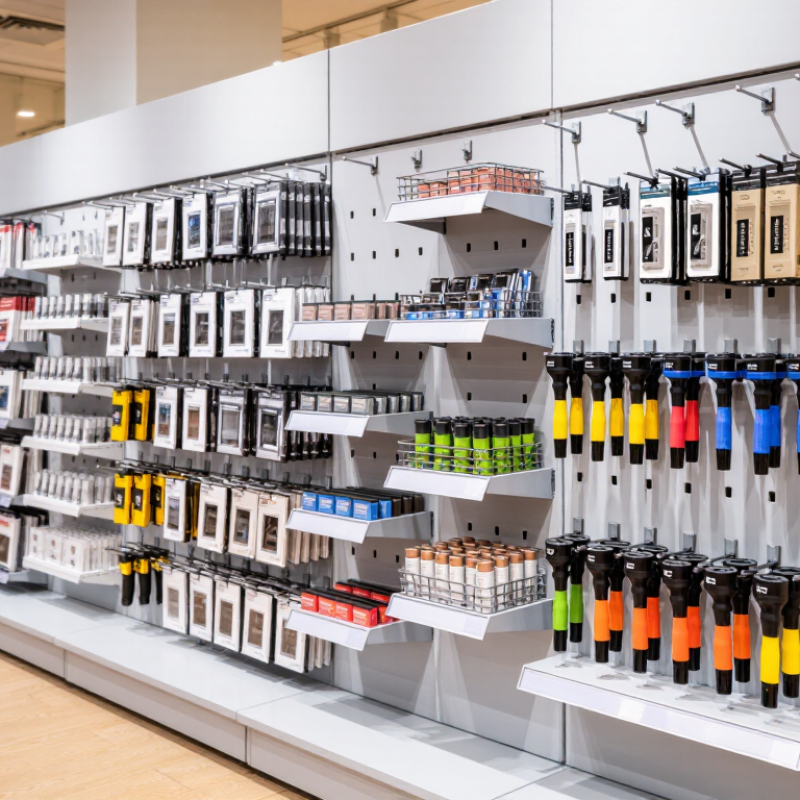
Pegboard displays are perforated panels used to organize and present retail products. Their evenly spaced holes accept hooks, shelves, baskets, and small bins. Store staff can move these accessories without replacing the entire fixture. This makes pegboards practical for changing product sizes, seasonal stock, and promotional layouts. A shopper can see several items at eye level, while smaller products remain easy to reach.
The system works through simple weight distribution. Hooks pass through the panel and lock into place behind it. Shelves usually need stronger brackets, especially for boxed or dense products. A secure display depends on panel thickness, suitable hardware, and proper wall support.
In real stores, uneven loading can cause tilting or loose fittings. I have found that a neat layout may still fail if frequently handled items sit too high. Clearance also matters. Customers need enough space to remove one product without disturbing others.
Tips: Place best-selling items between waist and eye level. Use shorter hooks for lightweight packs and shelves for larger products. Leave visible gaps between product groups. Check fittings weekly for movement or wear. Test a new arrangement during busy hours, because customer behavior often challenges a perfect plan.
Pegboards improve retail product organization by turning unused wall space into a flexible selling area. In my retail display work, I have seen small stores gain clearer aisles after moving lightweight products upward. Hooks, baskets, and narrow shelves can hold different package sizes. Each item remains visible and easier to reach.
Good organization starts with a simple layout plan. Group products by use, size, or customer need. Keep popular items between eye and hand level. Place related accessories nearby, so shoppers can compare options without crossing the store. Clear spacing also helps staff count stock quickly. Labels should face forward and remain readable under normal lighting.
It is not always perfect. Too many hooks can make a pegboard look crowded. Heavy products may also require stronger fixtures and regular safety checks. I recommend testing one section before changing the entire store. Watch where customers stop, what they touch, and which products they overlook. Adjust the spacing when real shopping behavior disagrees with the original plan. Small changes matter. A well-maintained pegboard should support both customer movement and accurate replenishment, not merely fill an empty wall.
Pegboard displays are especially useful when a retail floor must change often. Their perforated panels accept hooks, baskets, shelves, and small bins. Staff can move these fixtures without rebuilding the wall. A spring promotion may need low shelves, while school supplies may need narrow hooks. The same panel can support both arrangements. This reduces visual clutter and keeps products within comfortable reach. It also helps teams test a layout before choosing permanent fixtures. In my experience, a small spacing change can improve browsing more than an expensive installation. That result is easy to miss. Store conditions still matter.
A flexible display works best when planning includes product weight, customer traffic, and staff routines. Heavy items need suitable brackets and secure wall fixing. High-touch products need sturdy hooks and clear spacing. When aisles change, panels can be grouped, separated, or paired with freestanding units. This makes seasonal resets faster and less disruptive. Yet flexibility has limits. Poorly balanced shelves may tilt, and too many empty holes can look unfinished. I would review the arrangement after a busy weekend, not only after installation. Sales movement, customer reach, and restocking time reveal practical weaknesses. A simple floor sketch helps staff reposition components consistently. Leave room for adjustment.
Pegboard displays help retail stores turn inventory into a visible, working system. Products hang at eye level, while empty hooks reveal missing stock quickly. This simple layout supports faster shelf checks and more accurate replenishment. Staff can scan a section without opening cartons or searching through crowded cabinets. In my experience, visibility reduces small mistakes that later become costly.
Each hook can hold a product category, size, or stock-keeping unit. Clear labels show where every item belongs. Staff can count remaining units during routine floor walks. A reorder card or digital record can then be updated immediately. Lightweight products also move easily when seasonal demand changes. The display grows with the store. It does not require a complete fixture replacement.
Pegboards support stock rotation, but only when employees follow a consistent placement rule. Newer items should move behind older ones when possible. That detail is easy to miss during busy hours. I once saw a well-organized display become confusing after several rushed restocks. The issue was not the pegboard itself. The team needed clearer labels and a fixed counting routine. Heavy products may also require stronger supports, and overloaded hooks can create safety concerns. Regular inspections remain necessary.
Pegboard displays are practical because they turn vertical space into usable selling space. In my experience, retailers can change hooks, shelves, and baskets without replacing the entire fixture. This reduces adjustment costs during seasonal promotions. It also helps smaller stores use narrow walls efficiently. Less floor equipment can mean clearer aisles and easier customer movement. However, low cost is not automatic. Weak panels, overloaded hooks, or poor installation can create repairs and wasted labor.
Their visual appeal comes from order and flexibility. Products can sit at eye level, grouped by color, size, or purpose. A clean arrangement helps shoppers compare items quickly. Open panels also let wall colors and product packaging remain visible. Good lighting makes the display feel brighter. Too much merchandise does the opposite. It looks crowded. Retail teams should review the layout weekly, because a display that worked last month may now block popular products or create empty-looking gaps.
Tips: Measure wall strength before installation. Keep heavier goods on lower shelves. Leave small spaces between product groups. Use consistent hook lengths for a calmer appearance. Photograph the display after setup, then review it from the entrance. This simple check often reveals awkward angles, hidden products, or signs that sit too high. A pegboard is useful, but it still needs thoughtful maintenance.
Pegboards are cost-effective because one panel can support many merchandising positions while allowing products to be rearranged without replacing the entire fixture. The chart uses a planning model based on common 1-inch pegboard hole spacing and a 1-inch perimeter clearance.
Approximate grid positions are calculated from common pegboard panel dimensions. Actual usable positions vary depending on hooks, shelves, product size, and required spacing between items.
It is a perforated panel for organizing retail products. Hooks, shelves, baskets, and small bins fit into its holes. Products remain visible and reachable.
Hooks pass through the panel and lock behind it. Shelves need stronger brackets for boxed or dense products. Wall support and panel thickness affect stability.
Staff can move hooks and shelves without rebuilding the wall. A seasonal display may use low shelves, while smaller items use narrow hooks. Layouts can change quickly.
Best-selling products usually work well between waist and eye level. Lightweight packs suit shorter hooks. Larger products need shelves. Reach matters more than appearance.
Empty hooks reveal missing stock quickly. Clear labels show where each product belongs. Staff can count items during regular floor checks. Simple systems help.
Distribute weight evenly across the panel. Use suitable brackets for heavier products. Check fittings weekly for movement or wear. Overloaded hooks can loosen.
Leave enough clearance to remove one item without disturbing nearby products. Visible gaps also separate product groups. A crowded display looks efficient, but it may slow shopping.
Items may sit too high for comfortable handling. Rushed restocking can mix sizes or product categories. A neat layout can still fail during busy hours. Test it in real conditions.
Pegboard Displays are practical retail fixtures that use a perforated panel and adjustable hooks, shelves, or baskets to present products in an organized and accessible way. By allowing merchandise to be grouped by category, size, or purpose, they help customers browse more easily while making the sales floor look cleaner and less crowded. Their open structure also improves product visibility and encourages efficient use of vertical space, making them suitable for stores of different sizes.
Another major advantage of Pegboard Displays is their flexibility. Store staff can quickly reposition accessories and rearrange merchandise when introducing seasonal items, promotions, or new product categories. This adaptability also supports inventory management by making stock levels easier to monitor and replenishment more efficient. Since the same display system can be reused in multiple layouts, it can reduce long-term fixture costs. With thoughtful product placement and coordinated colors, pegboards can also create a neat, modern, and visually appealing shopping environment.

Expandrack