Global buyers need more than attractive fixtures when comparing Floor Stand Displays. They need reliable performance across stores, warehouses, climates, and customer journeys. A display may look impressive in a showroom, yet feel unstable on a busy retail floor. That gap matters.
Retail experience expert Martin Lindstrom said, “The senses are the shortcuts to the brain.” His point applies directly to floor merchandising. A strong display should guide the eye, invite touch, and communicate a product’s value within seconds. It should also support practical needs, including load capacity, footprint, assembly time, cable management, and branding flexibility. Small details matter. Rounded edges, replaceable graphics, and a stable base can reduce daily problems.
This guide reviews ten leading Floor Stand Displays for international buyers. The comparison considers material quality, modular construction, portability, visual impact, maintenance, and suitability for different retail environments. It also examines packaging efficiency and after-sales support, because global purchasing rarely ends at delivery. A product that ships well but assembles poorly can waste valuable store labor. That weakness is easy to overlook.
No ranking is flawless. Buyer priorities change by market, product category, and store format. A premium cosmetics stand may not suit a grocery aisle. Likewise, a lightweight event display may fail in a permanent showroom. The selected models offer useful benchmarks, but buyers should test samples before committing to large orders. Real-world trials reveal more than polished photographs. That is the honest part.
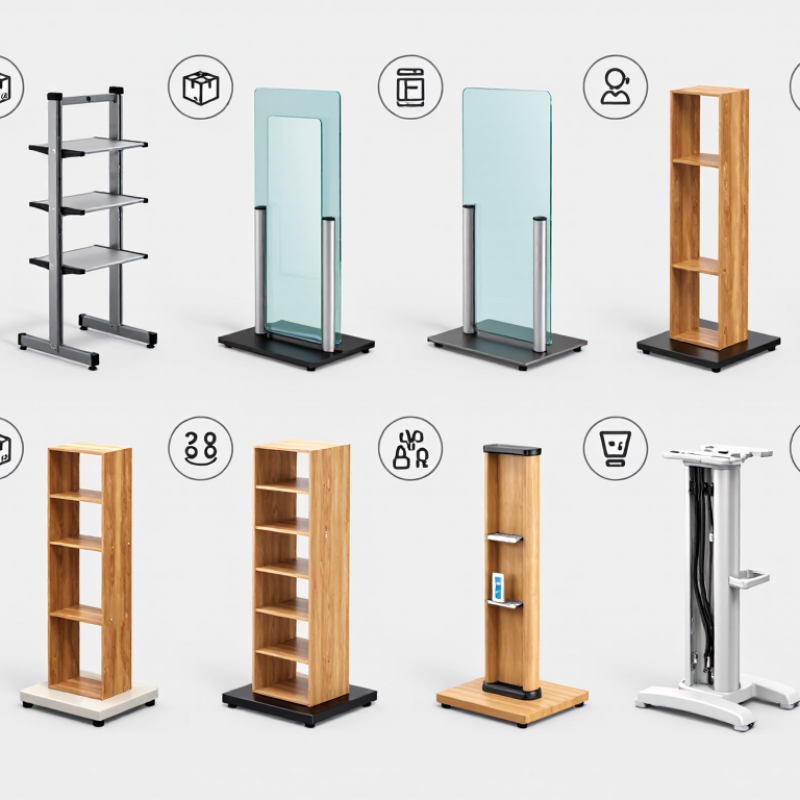
A floor stand display is a freestanding retail unit that presents products at eye level, hand height, or checkout distance. Unlike shelf signage, it creates a separate shopping destination inside a store. The ten most useful formats include shelving towers, pegboard stands, rotating racks, dump bins, basket stands, literature holders, pallet displays, locked cabinets, tiered risers, and modular counters. Each format supports a different retail task. A shelving tower suits packaged goods, while a rotating rack improves browsing in narrow aisles. A strong unit should offer stable loading, clear product access, tool-free assembly, and compact shipping. Visibility matters.
Its role is both commercial and operational. PwC’s 2024 Global Consumer Insights Pulse Survey reported that 43% of consumers shop in physical stores weekly. Physical displays still matter when shoppers want to compare size, texture, or instructions directly.
Grand View Research’s 2024 retail display market analysis also projects continued growth through 2030, reflecting demand for measurable in-store presentation. From practical sourcing experience, global buyers should request drawings, material specifications, carton dimensions, and test samples before approving volume production. A display that looks impressive may block sightlines or collapse under real stock. That assumption fails. Retailers should measure dwell time, product interaction, replenishment effort, and sales lift by location. Results can be imperfect because weather, staffing, promotions, and store traffic distort comparisons. Still, disciplined testing usually beats attractive guesswork.
Global buyers should compare ten floor-stand formats. These include banner stands, poster easels, brochure towers, literature racks, and gridwall. Add slatwall, pegboards, garment rails, product towers, and digital kiosks. The right choice depends on traffic, handling, replenishment, and safety.
POPAI’s Shopper Engagement Study reported that 76% of purchase decisions occur in-store.
That figure is dated, but still useful. Treat it as a signal, not universal truth.
A practical scorecard can assign
Buyers should adjust these weights for their retail environment. Banner stands and poster easels save space but hold little stock. Gridwall, slatwall, and pegboards suit heavier products when load ratings are verified. Brochure towers support sampling, while garment rails prioritize access and quick recovery. Product towers create strong visual blocking, yet may obstruct sightlines. Digital kiosks add interaction, but need power, updates, and technical support.
Compare packed size, assembly time, tools, and carton damage during a pilot shipment.
Grand View Research valued the adjacent global digital signage market at USD 26.6 billion in 2023.
Its projected growth makes digital units worth examining, not automatically choosing. Request recycled content, repair instructions, material separation, and end-of-life guidance. The Ellen MacArthur Foundation supports circular design, although fixture-specific benchmarks remain inconsistent.
Measure conversion carefully. A display can look premium and still fail when shelves sag, wheels lock, or graphics curl. Check local fire, accessibility, electrical, and packaging requirements before purchase.
The Top 10 Floor Stand Displays for Different Buyer Requirements
The ten most useful floor stand categories serve different spaces and selling goals. Slim literature stands suit narrow retail aisles and reception areas. Adjustable poster stands help buyers change campaigns without replacing the frame. Banner stands offer quick branding at exhibitions and temporary events. Product display towers give small items stronger height and visibility. Lockable brochure stands protect printed materials in busy public locations.
Digital kiosk stands support touchscreens, registration, and guided product information. Their base must resist tipping during repeated use. Modular floor displays work well for buyers who refresh layouts often. Directional sign stands improve movement through showrooms, clinics, and large venues. Heavy-duty outdoor stands need weather-resistant finishes and stable feet. Finally, sampling or demonstration stands provide working space for trained staff.
In practical purchasing, I check the stand’s footprint, maximum load, edge safety, and packing method. A display may look impressive but still waste valuable floor space. Steel offers strength, while aluminum reduces carrying weight. Wood can create warmth, yet it usually needs better moisture protection. I also examine cable routing, print replacement, cleaning access, and assembly time. Accessibility matters too; signs should remain visible without blocking movement. One common mistake is choosing by appearance alone. I have seen tall displays become unstable when buyers ignored uneven floors. A small test assembly often reveals more than a polished product image. Specifications should be confirmed in writing, especially for repeated international shipping.
The chart compares widely used floor stand display formats by typical assembled height. Each format is matched with a common buyer requirement, helping importers select the right display structure for retail, events, hospitality, and point-of-sale environments.
Measurements show representative midpoints of commonly specified commercial formats. Actual dimensions, load capacity, materials, and packing requirements vary by supplier and configuration.
Global buyers often shortlist ten floor-stand formats: wire grid, slatwall, pegboard, acrylic, cardboard, timber, metal, rotating, modular, and digital displays. The best choice depends on product weight, store traffic, and delivery distance. In practical sourcing tests, metal frames handled heavy cartons well, while acrylic created a cleaner premium appearance. Scratches appeared quickly, however. That detail is easy to miss.
Material documentation should accompany every quotation. FSC’s 2023 facts and figures report recorded more than 160 million hectares of certified forest worldwide, making certified wood easier to verify. Recycled cardboard can reduce weight, but humidity may weaken its base. Request recycled content percentages, coating details, fire-performance information, and load-test results. Customization should cover dimensions, graphics, shelf spacing, knock-down structures, and replacement parts. Digital units need extra checks for power ratings and electromagnetic safety.
Shipping design affects the final cost more than many buyers expect. UNCTAD’s Review of Maritime Transport 2024 states that over 80% of global merchandise trade moves by sea. Flat-packed panels can reduce cubic volume, but poorly protected corners create expensive damage claims. Use moisture barriers, edge guards, drop testing, and clear carton markings. Confirm Incoterms, HS classification, country-of-origin labels, and installation instructions before production. For European sales, the General Product Safety Regulation has applied since December 13, 2024. Requirements vary by product and market, so independent testing remains worthwhile. A low quote is not always a compliant quote.
| Rank | Floor Stand Format | Typical Applications | Common Materials | Customization Options | Typical Size and Capacity | Shipping Considerations | Key Compliance Considerations |
|---|---|---|---|---|---|---|---|
| 1 | Adjustable Shelving Display | Retail products, packaged goods, electronics accessories, and general merchandising. | Powder-coated steel, aluminum, MDF, acrylic, or tempered glass shelves. | Shelf count, shelf pitch, hooks, header panels, color, graphics, locking storage, and lighting. | Approximately 1.6–2.2 m high; 4–8 adjustable shelves; load rating must be specified per shelf. | Usually ships flat-packed or partially assembled; confirm carton strength and pallet stacking limits. | Load stability, sharp-edge protection, glass safety, coating restrictions, and local retail fixture requirements. |
| 2 | Slatwall Floor Display | Apparel, footwear, tools, accessories, and products requiring flexible hooks or shelves. | MDF or plywood panels, aluminum profiles, steel bases, and laminate or PVC finishes. | Panel color, groove spacing, hooks, baskets, shelves, wheels, header signs, and branded graphics. | Approximately 1.5–2.0 m high; accessory capacity depends on panel strength and hook spacing. | Panels can be flat-packed, but metal bases add weight; protect edges and corners during export handling. | Panel fire performance where required, tip resistance, formaldehyde emissions for wood panels, and material labeling. |
| 3 | Pegboard Floor Stand | Hardware, craft supplies, small packaged products, tools, and impulse merchandise. | Perforated steel, wire grid, MDF, powder-coated tubing, and injection-molded accessories. | Single- or double-sided panels, hook lengths, baskets, shelves, caster wheels, header cards, and colors. | Approximately 1.4–1.9 m high; common hole spacing is 25 or 50 mm, depending on the system. | Efficient when nested or knocked down; package hooks separately to prevent panel scratches and deformation. | Tip-over testing, hook retention, edge protection, corrosion resistance, and safe working-load marking. |
| 4 | Wire Grid Display Rack | Lightweight goods, greeting products, seasonal merchandise, and promotional displays. | Welded steel wire, powder coating, chrome plating, plastic feet, and steel tubing. | Grid size, basket depth, shelf angle, sign holder, color, casters, and single- or double-sided layout. | Approximately 1.2–1.8 m high; shelf loads are typically light to medium and require confirmation. | Generally lightweight and easy to nest; use separators or protective film to reduce abrasion between frames. | Weld quality, coating chemical restrictions, pinch-point control, stability, and corrosion testing for humid markets. |
| 5 | Acrylic Counter-to-Floor Tower | Cosmetics, eyewear, collectibles, premium accessories, and visually focused product launches. | Clear or colored acrylic, aluminum, steel, PETG, and laminated graphic panels. | Transparent shelves, UV printing, edge lighting, locking doors, shelf angles, and color matching. | Approximately 1.5–2.0 m high; best suited to light products unless reinforced with metal framing. | Requires protective film, corner guards, and temperature-conscious packaging; avoid excessive unsupported spans. | Flammability classification where applicable, UV stability, breakage safety, edge finishing, and recycling marks. |
| 6 | Rotating Carousel Stand | Small accessories, postcards, stationery, packaged snacks, and high-SKU merchandise. | Steel wire, aluminum, MDF, acrylic pockets, and ball-bearing or bushing mechanisms. | Number of tiers, pocket size, rotation mechanism, sign topper, base color, and locking or weighted base. | Approximately 1.3–1.9 m high; capacity depends on pocket dimensions and allowable rotating load. | Protect moving parts from impact; secure shelves and include assembly instructions for the rotating mechanism. | Pinch-point protection, center-of-gravity stability, smooth rotation, corrosion resistance, and safe-load information. |
| 7 | Pallet-Style Dump Bin | Bulk promotions, clearance sales, toys, soft goods, and high-volume retail campaigns. | Corrugated board, honeycomb board, MDF, plywood, steel tube, and polypropylene liners. | Bin depth, divider layout, printed panels, reinforced corners, caster wheels, and replaceable headers. | Approximately 0.8–1.4 m high; load capacity varies substantially by board grade and frame design. | Corrugated versions are compact and recyclable; protect against moisture and specify pallet and stacking limits. | Packaging-material recycling marks, edge safety, moisture resistance, structural load limits, and fire rules for public venues. |
| 8 | Pop-Up Fabric Tension Stand | Trade shows, temporary retail campaigns, demonstrations, and mobile brand presentations. | Aluminum pop-up frame, polyester fabric, ABS connectors, MDF counter, and steel feet. | Fabric dye-sublimation graphics, shelving, monitor mounts, lighting, counters, and carrying cases. | Common widths are 0.8–3.0 m; assembled heights are often 2.0–2.5 m, depending on event rules. | Designed for compact transport; textile, frame, and hardware should be packed separately to prevent graphic damage. | Textile flammability certification may be required by venues; check electrical rules for lighting or monitor accessories. |
| 9 | LED Lightbox Floor Display | Retail advertising, event backdrops, hospitality, showrooms, and illuminated product messaging. | Aluminum extrusion, SEG fabric, acrylic diffuser, polycarbonate, LED modules, and steel base. | Single- or double-sided lighting, fabric graphics, dimming, color temperature, shelves, and modular frames. | Approximately 1.8–2.5 m high; electrical load depends on LED quantity, voltage, and power-supply design. | Frames may ship flat-packed; protect diffusers and include power supplies separately with clear installation labeling. | Electrical safety, applicable EMC requirements, plug type, input voltage, LED heat management, and regional marks. |
| 10 | Digital Screen Kiosk | Interactive catalogs, self-service ordering, wayfinding, product education, and digital advertising. | Steel or aluminum enclosure, tempered glass, powder coating, commercial display panel, and cable-management components. | Screen size, touchscreen, operating system, media player, camera, printer, locking access, color, and software interface. | Common screen sizes are 32–65 inches; floor height is often 1.4–2.0 m, with a weighted base required. | Ships in reinforced cartons or crates; account for screen fragility, lithium-battery restrictions, and voltage compatibility. | Electrical and EMC compliance, cybersecurity and data-privacy controls, accessibility, glass safety, and local plug standards. |
Buyer note: Dimensions, load ratings, electrical specifications, packaging methods, and required certifications vary by design and destination market. Confirm final drawings, materials, test reports, labeling, and import requirements before production.
Global buyers need more than an attractive floor stand. They need a display that survives shipping, assembly, and daily customer contact. Common options include banner stands, brochure racks, poster stands, literature towers, slatwall units, gridwall fixtures, rotating racks, product pedestals, digital kiosks, and modular frames. Each format suits a different selling environment.
Start with the venue. A narrow aisle may require a slim brochure rack, while a large exhibition hall may support a modular frame. Check the stand’s footprint, height, weight, base stability, and storage needs. Ask suppliers for material specifications, assembly instructions, load limits, and clear product photographs. A sample unit can reveal loose joints or sharp edges that a catalog hides.
Sourcing also requires practical questions. Confirm carton dimensions, protective packaging, minimum order quantity, production time, and replacement-part support. Request drawings with metric and imperial measurements when teams operate across regions. Materials should match local safety expectations and indoor-use conditions. Digital displays require extra checks for voltage, plugs, software, and screen brightness. Do not trust every promised delivery date. Port delays, revisions, and inspection failures can change the plan. I have found that a slightly heavier stand often feels safer, but it may increase freight costs. The cheapest quotation is rarely the cheapest project. Compare the full landed cost before approving production.
Use a scorecard covering footprint, visibility, capacity, portability, durability, and serviceability. Adjust the weightings for your space. A narrow aisle may value footprint more than capacity.
Slim literature stands, banner stands, and poster easels need little floor area. They suit reception desks, narrow aisles, and temporary events. Their stock capacity is limited.
Choose them for heavier or varied products. Confirm load ratings before installation. Uneven loading can cause bending or instability. That detail is easy to overlook.
Check power access, cable routing, screen mounting, and technical support. The base must resist tipping during repeated touch interactions. Software updates also require planning. It is not simply a screen on a stand.
Brochure towers and literature racks organize printed materials vertically. Sampling stands provide working space for trained staff. Lockable versions help protect materials in busy public areas. Cleaning access matters too.
Product towers create strong height and visual blocking. They can make small products easier to notice. However, they may obstruct sightlines or movement. Test the position with real foot traffic.
Conduct a small pilot shipment before placing a large order. Check packed size, assembly time, tools, and carton damage. Build the unit on an uneven floor. A product image cannot reveal every weakness.
Steel offers strength, while aluminum reduces carrying weight. Wood adds warmth but needs moisture protection. Ask about cleaning access, print replacement, repairs, and material separation. The premium finish may still fail.
Verify maximum load, edge safety, stable feet, and wheel locking. Keep signs visible without blocking movement. Check local fire, accessibility, electrical, and packaging requirements. Assumptions can become expensive.
Floor Stand Displays are essential retail tools that help products gain visibility, organize merchandise, and communicate brand messages in stores, exhibitions, and commercial spaces worldwide. This article compares the top ten types according to important buyer criteria, including stability, portability, capacity, appearance, durability, ease of assembly, and suitability for different retail environments. It explains how options such as modular, adjustable, rotating, collapsible, and specialized display stands can meet different product and presentation requirements.
The article also examines key sourcing considerations, including material selection, surface finishing, customization, packaging, shipping efficiency, and compliance with applicable market standards. Global buyers will learn how to evaluate suppliers, confirm product specifications, control quality, estimate total costs, and select a display solution that balances performance, design, and budget. By following a structured purchasing process, buyers can source Floor Stand Displays that support effective merchandising and reliable long-term use across multiple markets.

Expandrack