Choosing the right Folding Shelves starts with the space they need to serve. A narrow laundry corner, a busy garage, and a small home office call for different designs. Measure the available width, depth, and height before comparing products. Leave room for doors, walkways, and the shelf’s folding movement. A few centimeters can matter.
Look closely at the rated load, shelf material, frame, hinges, and locking mechanism. Match the stated capacity to what you plan to store, and distribute weight evenly rather than piling heavy items on one edge. Check whether the unit is freestanding or designed for wall mounting, then follow the manufacturer’s installation and load instructions. For damp rooms, suitable finishes and corrosion-resistant hardware may help shelves last longer. Smooth folding action matters, too. Pinched fingers are no small annoyance.
Convenience can be tempting. But a low price or attractive finish cannot tell you how stable a shelf will feel in daily use. Consider how often you will fold it away, whether the folded unit is easy to move, and whether its open position feels secure on your floor. Reviews can reveal recurring concerns, though individual experiences vary. One detail is easy to miss: a shelf that fits the room may still block a switch or cabinet when opened. This guide explains how to compare practical features, avoid common buying oversights, and choose Folding Shelves that suit your space and routine. Even careful planning has limits; measure twice.
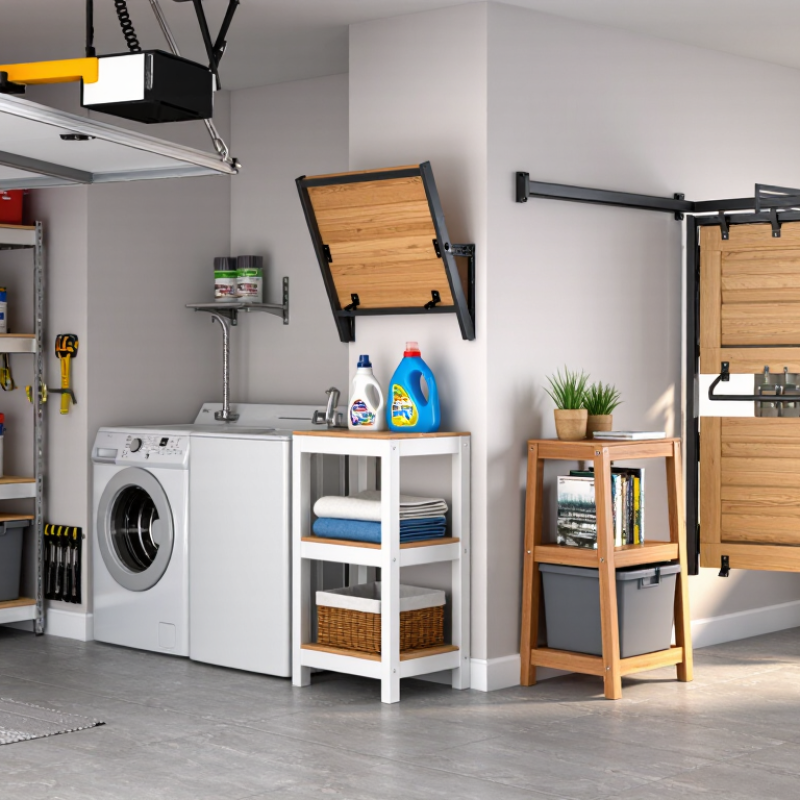
What Folding Shelves Are and How They Work
Folding shelves are storage platforms that swing down for use and fold against a wall or frame when space is needed. Unlike fixed shelves, they rely on hinges and support brackets that move with the shelf. That saves space. When open, locking arms or braces help hold the platform level and carry its load.
In a wall-mounted design, weight travels from the shelf through the brackets and fasteners into the wall. The exact capacity depends on the shelf, mounting surface, and installation. Check the stated load limit and use fasteners suited to the wall material. Drywall alone may not offer reliable support. Keep heavy objects close to the wall, where they create less leverage on the brackets. Small details matter.
Before choosing one, consider what it will hold and how often you will fold it away. A shelf for laundry supplies needs a different surface and capacity from one used for a light laptop. Measure the open depth, too; a door, chair, or passing walkway may be in its path. In practice, the neat part is also the fussy part: hinges need clearance, and dust can collect around them. Check that the shelf opens smoothly and locks securely before placing items on it.
Which Materials and Designs Suit Your Space?
Choosing folding shelves starts with the room’s conditions, not just its appearance. In a kitchen or laundry area, powder-coated steel handles occasional splashes better than untreated wood. Solid wood adds warmth, but it may swell in damp rooms unless sealed and maintained. For lighter loads, laminated board can work well; check the stated weight limit and support spacing before buying. A shelf holding cookbooks needs sturdier brackets than one displaying a small plant.
Design affects how comfortably the shelf fits your routine. Wall-mounted models keep the floor clear, while freestanding folding units can move between rooms. Measure the open shelf depth and the space needed for its folded position. A narrow hallway may suit a shallow shelf, though it can feel cramped when opened. I once focused too much on the finish and overlooked the hinge clearance. It looked right, but the door nearby could not swing fully.
Tips: Check the wall type and use suitable fixings. Test the folding motion before loading the shelf. Keep heavy items near the brackets, and leave a little space around hinges. A tidy design is useful, but awkward daily access gets old fast.
How to Choose the Best Folding Shelves: Materials and Designs for Your Space
How to read this chart: Ratings are a general guide from 1 (less suitable) to 5 (more suitable), not load-capacity measurements. Steel is a sturdy option for many indoor uses; aluminum is lightweight and naturally corrosion-resistant; solid wood suits dry rooms; and plastic is lightweight and moisture-resistant. Check each shelf’s stated load limit and care instructions before buying.
How Much Weight Must the Shelves Support?
Before choosing folding shelves, estimate the weight each shelf must carry. Count books, storage bins, tools, or kitchen items, then add their weight rather than guessing by appearance. Books can become surprisingly heavy when packed tightly. Start with the load.
Check whether the listed capacity applies to one shelf or the entire unit. Also see whether it assumes weight is spread evenly; a heavy box placed at the front edge can strain hinges and brackets more than evenly arranged items. Not just the shelf. The weakest part matters: wall anchors, screws, mounting surface, folding supports, and shelf material all affect safe capacity. Follow the installation instructions, especially if the shelves attach to drywall or masonry. A strong shelf cannot compensate for unsuitable fasteners.
Leave a practical margin above your expected load. If you expect 30 pounds of supplies, choosing a shelf rated for exactly 30 pounds leaves little room for uneven placement or changing contents. Fold the shelves and inspect their locks or support arms before loading them. It is easy to overlook a loose bracket during a quick setup. Recheck it after the first few days, and do not climb or stand on a shelf unless its instructions explicitly permit that use.
Which Mounting and Safety Features Should You Check?
Mounting quality matters as much as shelf capacity. Check the instructions for the recommended wall type and fasteners before drilling. A screw suited to a timber stud may not hold safely in hollow drywall. Locate solid framing where required, and use anchors rated for the wall material when the instructions allow them. If the wall feels crumbly or the fixing point shifts, stop and reassess.
Look closely at the hinges and locking supports. They should open fully and engage without sticking, wobbling, or needing force. Test the shelf empty first. It should sit level and remain firmly supported when opened. Keep the folding path clear of handles, pipes, and nearby doors. A pinched finger is an easy detail to overlook.
Check the stated load limit, and remember that weight placed near the front edge puts more strain on the mount. Spread items across the surface instead of stacking heavy objects in one corner. I used to focus on the shelf board and give the wall fixings too little attention; that was a poor shortcut. Recheck screws after installation and periodically thereafter. If a hinge loosens or the shelf sags, unload it before tightening or inspecting the hardware.
How to Compare Sizes, Installation, and Maintenance Needs
How to Choose the Best Folding Shelves?
Compare shelf dimensions with the items you plan to store, not just the empty wall space. Measure width, depth, and folded projection, then check that doors and walkways remain clear. Measure twice. A shelf that holds small jars may not support bulky storage boxes comfortably. Check the stated load limit and whether it applies to the whole unit or each shelf. If the rating is unclear, choose a more conservative load.
Installation depends on the shelf design and wall material. A wall-mounted unit needs suitable fasteners, and heavy loads generally require attachment to structural framing or anchors rated for that wall. A freestanding model avoids drilling but still needs a stable, level floor. Check hinge movement before loading the shelves. I’ve found that a few millimeters of clearance can matter near trim or a door; it is easy to overlook.
Tips: Keep the folded shelf clear of cords and handles. Wipe hinges and surfaces with a soft, slightly damp cloth, then dry them. Check fasteners periodically, especially if the shelves are opened often. Don’t force a stiff hinge; inspect it first, since dust or misalignment may be the cause. A little maintenance helps, though it won’t fix a poorly matched installation.
Conclusion
Choosing the best Folding Shelves starts with understanding how their hinged brackets let the shelves fold down when needed and tuck away to save space. Consider where they will be used, then choose materials and a design that suit the room’s appearance and conditions. Wood can add warmth, while metal or other sturdy materials may be better for practical storage areas.
Before buying, estimate the weight the shelves must support, including the items’ combined load, and check the stated capacity. Look for secure brackets, suitable fasteners, and mounting instructions that match your wall type. Compare the shelf dimensions with the available space and consider how easy installation will be. Finally, think about maintenance: surfaces that are simple to clean and materials suited to everyday use can help keep the shelves functional and looking good over time.

 Expandrack