How to Choose Heavy Duty Racks for Your Warehouse?

Time:2026-11-14 Author:Amelia
0%

Choosing Heavy Duty Racks is not just a matter of finding the strongest-looking steel frame. The right system must fit your inventory, equipment, building, and daily workflow. A rack that works well for boxed parts may be unsuitable for long steel lengths or bulky pallets. Small mismatches can create wasted aisle space and awkward handling.

Start with the load. Check the weight and dimensions of each pallet, including how loads are distributed across beams and shelves. Then consider how often items move, what forklift or pallet jack will access them, and whether the floor is level and in good condition. These details matter. So does future growth. A layout that feels generous today can become cramped after a few new product lines arrive.

Reliable selection also depends on accurate capacity information from the rack manufacturer or supplier. Compare the stated limits with your actual storage plan, and ask how beam spacing, rack height, and configuration affect those limits. Do not assume that thicker-looking components automatically make a safer system. Installation quality, inspections, and clear operating practices all matter. Even then, no rack is maintenance-free. That is easy to overlook when a warehouse is busy.

This guide explains the main factors to review before buying, from load capacity and rack type to aisle layout and ongoing care. Use it as a practical starting point, not a substitute for a site-specific assessment. A careful choice can improve storage efficiency while helping staff handle goods with greater confidence.
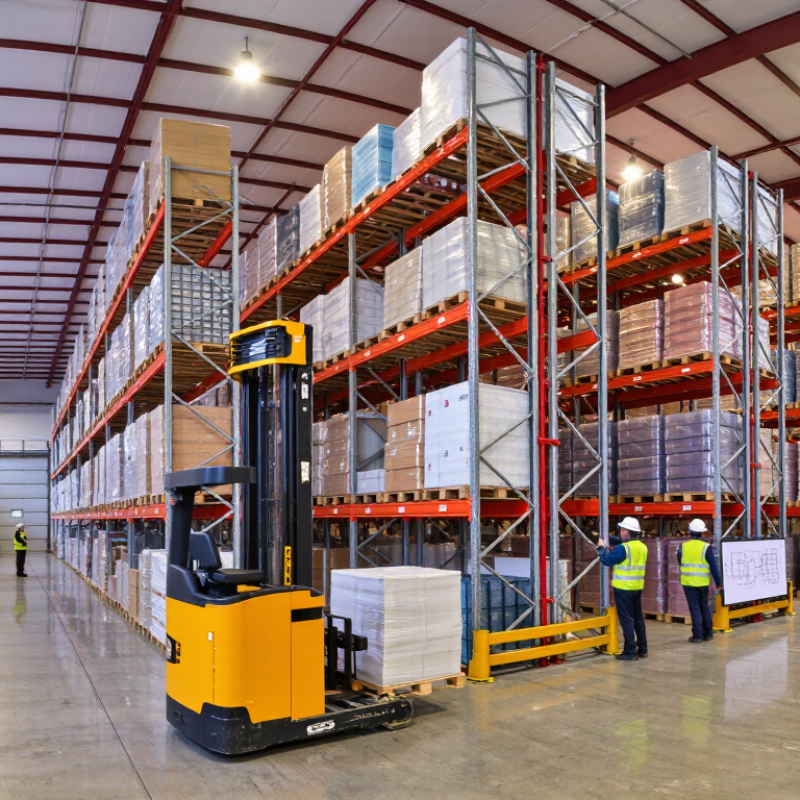
How to Choose Heavy Duty Racks for Your Warehouse?

Understanding Heavy-Duty Warehouse Racks and Their Main Types

Heavy-duty warehouse racks are steel storage systems designed for concentrated loads, frequent handling, and demanding operating conditions. Their main types solve different space and access problems. Selective pallet racks give forklifts direct access to every pallet, making them practical for mixed stock. Drive-in racks use deep lanes, storing more pallets in less floor space but limiting access to individual loads. Push-back systems keep pallets on nested carts; each lane works best with fewer product types. For long items, cantilever arms support lumber, pipe, or sheet material. Carton-flow shelves use gravity rollers for fast picking. That matters.

Material Handling Industry’s 2024 Annual Industry Report found that 55% of respondents planned to increase supply-chain technology investment within two years. The figure concerns technology, not rack purchases, but it highlights a useful point: storage design should fit the inventory and tracking process. For example, high-turnover cartons may suit flow shelves, while varied pallet stock often needs selective access. Check beam capacity, pallet dimensions, forklift clearance, floor condition, and load signage before installation. OSHA’s warehousing guidance stresses keeping stored materials stable and secure. Still, drawings can miss real aisle habits. Walk the floor, watch turning space, and question whether the densest layout is actually workable.

How to Choose Heavy-Duty Warehouse Racks?

Understanding Heavy-Duty Warehouse Racks and Their Main Types

Direct access means a pallet can be reached without moving another stored pallet. This illustrative comparison assumes selective racks are one pallet deep, double-deep racks are two deep, and drive-in, push-back, and pallet-flow lanes are five deep, with one SKU per lane. Actual layouts and access depend on rack design and operating conditions.

Assessing Load Requirements and Warehouse Inventory

Choosing heavy-duty racks starts with measured loads, not guesswork. Record each pallet’s weight, including the pallet, packaging, and product. Check the heaviest realistic load, rather than relying on an average. Measure twice. Compare these figures with the rack’s beam and frame capacities for the exact configuration. Beam levels and load placement can affect capacity, so confirm ratings with a qualified rack professional.

Inventory details matter too. Note pallet dimensions, entry direction, stackability, and how quickly each item moves. A bulky, slow-moving pallet may need a different bay than a compact item picked every hour. Keep enough clearance for forklifts and for safe loading. Small details matter. A pallet recorded as 700 kilograms may weigh more after packaging changes or seasonal additions. And, honestly, inventory records are often less tidy than they look. Verify a sample on the warehouse floor, then revisit the figures when stock patterns change. Leave capacity for realistic growth, but avoid buying for a vague future that never arrives.

Measuring Warehouse Space and Planning Rack Layout

Measuring Warehouse Space and Planning Rack Layout

Start with a measured floor plan, not a rough estimate. Record clear height, column locations, doors, dock positions, floor obstructions, and sprinkler heads. Then map each rack row and aisle, including the space needed for turning, loading, and maintenance. Check the turning radius and load capacity of the actual lift trucks; a layout that looks spacious on paper may feel tight in operation.

Leave room for reality.

The 2024 MHI Annual Industry Report found that 55% of respondents planned to adopt robotics and automation within five years.

Even if automation is not planned today, keep routes and end-of-aisle areas flexible. Mark pedestrian paths separately from equipment travel, and test the drawing against the largest loads and widest vehicles.

OSHA’s 29 CFR 1910.159(c)(10) requires at least 18 inches of clearance between sprinkler deflectors and stored goods. Confirm local fire-protection requirements before fixing beam heights.

That detail is easy to miss.

Measure twice, then walk the proposed layout with operators. They may spot blocked sightlines or awkward pallet turns that the drawing cannot show. Recheck dimensions after installation; columns, guards, and product overhang can quietly reduce usable aisle width.

A small buffer helps, though it can also cost valuable storage space. That trade-off deserves a second look.

Comparing Rack Materials, Safety Features, and Compliance

Heavy-duty racks are usually made from structural or roll-formed steel, but the best choice depends on the load and working environment. Structural steel can suit demanding, high-capacity applications; roll-formed systems may offer flexibility for changing storage needs.

In damp or washdown areas, coatings or galvanized finishes can help resist corrosion. Check the finish specification, not just its appearance. Measure twice. A rack that fits the pallet but blocks a sprinkler or aisle is not a good fit.

Safety features deserve the same attention as material. Look for clear load plaques, secure beam connectors, upright guards, and anchoring suited to the floor. Confirm that rated capacities match the actual pallet weight and load distribution; uneven or overhanging loads can create risks that a label cannot solve.

Not always obvious. Ask for drawings, capacity documentation, and installation records, then check them against local building, fire, and seismic requirements. Requirements vary by site, so a supplier’s general claim of compliance is not enough.

A common planning mistake is treating inspections as a one-time task. Set a documented inspection schedule, and record impacts, loose connections, or damaged components. Even small damage needs review before the affected bay returns to service.

Selecting, Installing, and Maintaining the Right Rack System

Choosing heavy-duty racks begins with the loads, not the aisle layout. Record each pallet’s weight, dimensions, and handling method, then confirm beam and bay capacities with a qualified rack designer. Leave room for forklifts to turn without clipping uprights. Measure twice. The U.S. Bureau of Labor Statistics reported 930 fatal work injuries in transportation and warehousing in 2023; this figure covers the entire sector, not rack incidents specifically. It is a sober reminder to treat installation and traffic planning as safety work, not just storage planning.

During installation, follow the approved drawings, anchor specifications, and applicable building requirements. Check that frames are plumb, anchors are secure, and load plaques remain visible from the aisle. Keep damaged or altered components out of service until a competent person assesses them. Small details matter. Set a documented inspection schedule, and look for bent uprights, loose anchors, impact marks, and overloaded beams. Record findings with dates and photos; a quick glance can miss slow changes. I have seen clean aisles create a false sense of security: one damaged lower upright behind a pallet can be easy to overlook. The BLS figure comes from its 2023 Census of Fatal Occupational Injuries, not a rack-specific study.

How to Choose Heavy Duty Racks for Your Warehouse? - Selecting, Installing, and Maintaining the Right Rack System

Planning Stage Data Dimension Practical Guideline What to Measure or Verify
Selection Stored load and pallet weight Record the heaviest fully loaded pallet, not just the average. Include the pallet itself and any packaging or attachments. Confirm the rated capacity of each beam level and the complete rack bay with the rack supplier or a qualified engineer.
Selection Pallet dimensions and overhang Measure pallet length, width, height, and load stability. Allow for the actual pallet and load profile when determining beam spacing and aisle layout. Check pallet condition, fork-entry direction, load overhang, and clearance to adjacent loads and uprights.
Selection Forklift aisle width Use the truck manufacturer’s specified aisle requirement for the truck, load, and handling method. As an initial planning estimate, counterbalance trucks often need about 12–13 ft (3.7–4.0 m), reach trucks about 8–10 ft (2.4–3.0 m), and very-narrow-aisle systems about 5–6 ft (1.5–1.8 m). Verify turning radius, load dimensions, operating clearances, floor conditions, and the selected truck’s data plate or specification.
Selection Building height and obstructions Set rack height according to usable clear height, truck lift capability, sprinkler protection, lighting, doors, and overhead services. Survey the lowest obstruction and confirm required clearances with the building, fire-protection, and local code requirements.
Selection Rack configuration and access Select a layout that matches stock rotation and access needs. Selective pallet racks provide direct access to each pallet; denser systems may limit direct access or require specific inventory practices. Compare required pallet positions, pick frequency, SKU count, and inventory rotation before choosing a configuration.
Selection Floor and seismic conditions Rack suitability depends on floor slab capacity, concrete condition, soil support, and local seismic design requirements. Obtain site-specific review of slab thickness, concrete strength, anchor locations, and applicable building codes before installation.
Installation Anchoring and plumbness Install frames, braces, anchors, and beam connectors according to the approved drawings and installation instructions. Do not modify structural members without approval. Check anchor type and installation, frame alignment, upright plumb, beam engagement, and connector locks during installation.
Installation Load notices and operating rules Display legible load-capacity notices for each rack configuration. Train operators to place loads evenly and avoid impact with uprights. Ensure posted ratings match the installed layout and that changes to beam elevations or components receive a capacity review.
Maintenance Routine inspections Inspect racks regularly and after significant impacts, unusual loading, or visible damage. Frequency should reflect traffic, risk, and site procedures. Look for bent or twisted uprights, damaged braces, displaced beams, missing locks, loose anchors, corrosion, and overloaded or unstable loads.
Maintenance Damage response Restrict access to areas where damage may affect stability. Unload affected bays when necessary and obtain assessment and repair instructions from a qualified professional. Do not straighten, weld, or replace structural parts with unapproved components. Record the damage, corrective action, and follow-up inspection.

Planning figures are general starting points, not design ratings. Final rack selection, capacities, clearances, installation, and inspection procedures must be verified for the specific site, equipment, loads, and applicable codes.

FAQS

What are the main types of heavy-duty warehouse racks?

Selective racks provide direct access to every pallet. Drive-in racks store pallets in deep lanes. Push-back systems use nested carts. Cantilever racks hold long items, while carton-flow shelves help pick cartons quickly.

How do I choose between selective and drive-in racks?

Choose selective racks for varied stock and frequent access. Drive-in racks suit larger quantities of fewer products. They save floor space, but individual pallets are less accessible.

What load information should I collect before choosing racks?

Record each pallet’s full weight, including packaging and the pallet itself. Measure its dimensions, entry direction, and stackability. Check the heaviest realistic load, not just the average.

How can I confirm a rack’s capacity?

Match the exact rack configuration with its beam and frame ratings. Beam levels and load placement can affect capacity. Ask a qualified rack professional to verify the figures.

What should I consider when planning forklift aisles?

Allow enough room for forklifts to turn without striking uprights. Walk the floor and watch actual traffic patterns. A denser layout is not always workable.

What needs checking during rack installation?

Follow approved drawings and anchor specifications. Confirm frames are plumb, anchors are secure, and load signs are visible from the aisle. Small details matter.

How often should warehouse racks be inspected?

Set a documented inspection schedule. Look for bent uprights, loose anchors, impact marks, and overloaded beams. Take dated photos; a quick glance can miss gradual damage.

How should I plan for changing inventory?

Leave realistic capacity for growth, and revisit measurements when stock changes. Packaging can make a familiar pallet heavier. Records can be messy. Check samples on the floor.

Conclusion

Choosing Heavy Duty Racks for a warehouse starts with understanding the available systems and how each type supports different storage and access needs. Assess the weight, dimensions, and quantity of your inventory, including how goods move in and out, before deciding on a rack configuration. Accurate load information helps ensure the system can support stored items safely and efficiently.

Next, measure the warehouse, account for aisles and equipment, and plan a layout that makes good use of available space. Compare rack materials, safety features, and relevant compliance requirements, while considering durability and operating conditions. Once you select a suitable system, make sure it is installed correctly and inspected regularly. Ongoing maintenance and prompt attention to damage help preserve rack performance, protect workers, and keep warehouse operations organized.

Amelia

Amelia

Amelia is a seasoned marketing professional with a wealth of expertise in our company’s core offerings. With an unwavering passion for driving growth and innovation, she plays a pivotal role in shaping our marketing strategies and enhancing brand visibility. A key aspect of her responsibilities......