For global retail buyers, an endcap is more than a temporary shelf. It is a high-traffic decision point. Endcap Displays can turn a routine aisle visit into a measurable purchase opportunity. Yet a design that performs in Dubai may feel crowded in Copenhagen or unclear in São Paulo. Selection must connect shopper behavior, store format, product margin, and replenishment capacity. Experienced buyers study photographs, heat maps, weekly sell-through, and staff feedback before approving a rollout. They also inspect physical details: a 1.2-meter bay, uneven floors, freezer-door glare, and cartons that require opening without tools. Small constraints matter. Sometimes, the best-looking display slows restocking.
A reliable buying framework balances visual impact with operational proof. Material strength, assembly time, shipping volume, language flexibility, and recyclable components deserve equal attention. Regional teams should test one or two stores before committing to thousands of units. Compare conversion, stockouts, basket value, and shopper comments against a standard shelf position. Data helps, but it is not flawless. A short promotion can distort results, while local staff may arrange products differently. That weakness deserves discussion, not concealment. Suppliers should provide clear specifications, load limits, finish samples, and realistic delivery schedules. Buyers should question unsupported claims and document each assumption. The goal is not simply a striking fixture. It is a dependable endcap strategy built around Endcap Displays, designed to work across markets and remain practical after launch.
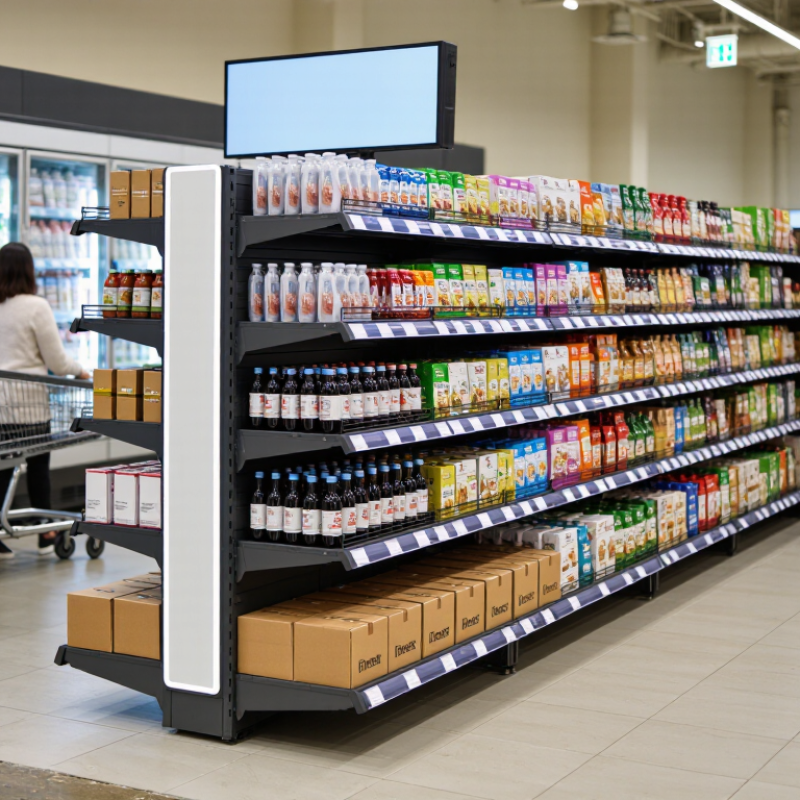
Endcap displays should serve a clear business purpose, not simply fill empty space. Their role may be product discovery, seasonal promotion, basket building, or shopper education. Define one primary goal before choosing the structure. A display overloaded with products often loses its message. Keep it focused.
Global retail teams should connect the endcap with local shopping habits and store conditions. A narrow aisle needs a compact footprint. A high-traffic entrance may support a stronger visual statement. Materials should withstand repeated handling, cleaning, humidity, and temperature changes. Accessibility also matters. Shelves must remain reachable, stable, and easy to restock. In practical store reviews, teams often discover that a beautiful prototype fails during daily operations. That is worth accepting and correcting early.
Tips: Test the display in one store format before wider buying. Measure sales uplift, shopper pauses, replenishment time, and damaged units. Ask store staff what feels difficult. Their feedback can reveal problems that reports miss. Use simple graphics and readable pricing across languages. Leave enough space for hands and carts. Recheck the display after two weeks, because the first result may be misleading.
Choosing endcap displays for global retail buying requires more than selecting attractive fixtures. Assess the product first. Heavy cartons need reinforced shelves, while chilled goods require airflow and safe temperature control. Measure pack sizes, replenishment speed, and local shopping habits. A tall display may perform well in one market but block sightlines in another. Store format matters.
Brand requirements also change across markets. Use clear visual hierarchy, readable pricing, and local language. Avoid overcrowding. The POPAI Shopper Engagement Study reported that 76% of brand choices were made in-store in measured grocery categories. However, I would not treat this figure as universal. It reflects older, category-specific research. PwC’s 2024 Voice of the Consumer Survey covered more than 20,000 consumers across 31 territories, showing why price, convenience, and trust must guide display decisions. Endcaps should therefore support quick comparison, not only visual impact.
Tips: Test one display in a high-traffic store before wider rollout. Track sales uplift, replenishment time, shopper stops, and product damage. Compare results by climate, format, and income profile. Leave space for local adjustment. A perfect global template rarely exists. I have seen attractive displays fail because staff could not refill them quickly. Pilot, measure, revise.
Choosing an endcap display for global retail buying requires more than an attractive sketch. Material, format, and customization affect shipping, assembly, durability, and shopper access.
Corrugated board is lightweight, affordable, and suitable for short campaigns.
Metal frames support heavier products and repeated store use.
Wood-based panels create a warmer appearance, but they may increase weight and freight costs.
Format changes how shoppers approach the display. A low, open unit improves product visibility and quick browsing. Tall shelving creates more capacity but can hide products placed above eye level. Rotating units work well for small packaged goods in narrow aisles.
Measure aisle width, shopper traffic, product weight, and replenishment space before approving a design. Traffic matters.
Customization should support store operations, not only visual impact. Modular shelves allow height changes when packaging sizes differ across markets. Adjustable hooks can reduce empty gaps and messy presentation.
Color, graphics, and language should match local preferences and retail guidelines. Provide clear assembly instructions with pictures, especially for stores using different teams.
I once underestimated the space needed for restocking, and the display looked crowded within days. That mistake changed our review process.
Pilot units in several store types before placing a large order. Check stability, edge finishing, print quality, cleaning needs, and local safety requirements. A cheaper material can become expensive after repairs, returns, or disposal.
How to Choose Endcap Displays for Global Retail Buying?
Evaluate Logistics, Compliance, Installation, and Maintenance Needs
A successful endcap display begins with its journey to the store. Measure the packed unit, not only the assembled frame. Confirm carton dimensions, pallet limits, loading methods, and destination warehouse capacity. Flat-pack designs often reduce freight costs. They can also increase assembly time. I have seen buyers overlook replacement parts during shipping plans. That creates delays when one connector is missing.
Compliance requires local checking. Review material safety documents, fire performance requirements, load ratings, and packaging rules for each market. Electrical components need extra attention. Confirm voltage, plug type, testing marks, and approved instructions before production. Translated labels should be accurate and easy to read. A general certificate may not satisfy every country. Ask local distributors or qualified compliance specialists to verify the final design.
Installation should suit real store conditions. Include clear diagrams, limited tools, adjustable feet, and secure anchoring options. Uneven floors can make a display look unstable. Test assembly with store staff, not only factory technicians. Maintenance planning is equally practical. Choose surfaces that resist frequent cleaning and provide accessible spare components. Define inspection intervals for shelves, fasteners, graphics, and lighting. Some displays look excellent at launch but age poorly. That weakness should be recorded and corrected before the next buying cycle.
Comparative planning scores for common endcap formats across logistics, compliance, installation, and maintenance needs. A higher score indicates lower operational complexity and greater suitability for multi-market retail deployment.
Flat-pack corrugated displays generally reduce freight volume and installation time, while modular metal and reusable plastic systems typically provide stronger durability and easier long-term maintenance. Local fire, material, packaging, labeling, and electrical requirements should still be verified before purchase.
How to Choose Endcap Displays for Global Retail Buying?
Measure Display Performance and Optimize Future Buying Decisions
An endcap display should earn its space through measurable results. Track unit sales, revenue, gross margin, and stockout rates before and after installation. Use a similar nearby period as your baseline. A busy holiday week can distort the results. Compare stores with similar traffic, size, and customer profiles. In global buying, local conditions matter. A display performing well in one region may underperform elsewhere. Record lighting, shelf height, product availability, and shopper flow. These details often explain unexpected results.
Our first test focused only on sales lift. That was too narrow. A display increased units sold but created frequent replenishment problems. The added labor reduced its real value. Now, we review sales per square meter, margin return, replenishment time, and execution quality. Store teams also provide useful evidence. Their comments may reveal blocked aisles, unclear pricing, or difficult assembly. Still, feedback can be subjective. Pair it with dated photos, inventory records, and weekly performance data. This creates a more reliable buying decision.
Tips: Test a small store group before wider purchasing. Set a clear measurement period. Keep product placement consistent. Review results by country, store type, and season. Ask whether the display improved profit, not just attention. Some results will remain unclear. Document those gaps honestly, then adjust the next specification. A simpler display may sometimes outperform a more expensive design.
| Market Cluster | Store Format | Category | Display Type | Stores Tested | Test Period | Average Weekly Units / Store | Sales Uplift | Conversion Rate | Sell-Through | Revenue / Display / Week | Replenishment Rate | Estimated ROI | Next Buying Decision |
|---|---|---|---|---|---|---|---|---|---|---|---|---|---|
| North America | Hypermarket | Home Storage | Six-Shelf Modular Endcap | 48 | 8 weeks | 31.4 | +26.8% | 11.6% | 82.4% | US$1,184 | 94.0% | 2.9x | Increase buy by 15% |
| Western Europe | Supermarket | Household Cleaning | Two-Level Clip-On Endcap | 36 | 6 weeks | 24.7 | +19.3% | 9.8% | 76.1% | €846 | 88.0% | 2.4x | Repeat with minor changes |
| Central Europe | Discount Store | Seasonal Kitchenware | Wire Basket Endcap | 52 | 5 weeks | 38.9 | +34.5% | 14.2% | 91.0% | €1,025 | 97.0% | 3.6x | Scale to more stores |
| East Asia | Convenience Store | Personal Care | Compact Pegboard Endcap | 64 | 7 weeks | 18.3 | +15.7% | 8.4% | 73.8% | ¥92,600 | 84.0% | 2.1x | Test a narrower assortment |
| Southeast Asia | Supermarket | Packaged Snacks | Cardboard Dump Bin | 44 | 6 weeks | 46.2 | +29.1% | 16.5% | 88.7% | US$714 | 92.0% | 3.2x | Increase seasonal allocation |
| Middle East | Hypermarket | Small Appliances | Lockable Feature Endcap | 28 | 8 weeks | 12.6 | +12.4% | 6.9% | 68.5% | US$1,492 | 79.0% | 1.8x | Improve demonstration content |
| Oceania | Department Store | Travel Accessories | Adjustable Gridwall Endcap | 22 | 7 weeks | 16.8 | +21.6% | 10.7% | 79.6% | A$1,078 | 86.0% | 2.5x | Maintain quantity and expand assortment |
| Latin America | Cash-and-Carry | Beverages | Pallet-Base Endcap | 40 | 6 weeks | 52.5 | +23.8% | 13.1% | 84.9% | US$968 | 90.0% | 2.7x | Increase display depth by 10% |
| Sub-Saharan Africa | Supermarket | Staple Foods | Low-Cost Wooden Endcap | 31 | 8 weeks | 27.9 | +17.2% | 9.1% | 75.4% | US$632 | 81.0% | 1.9x | Reduce fixture cost before rollout |
| South Asia | Modern Trade | Home Organization | Stackable Plastic Endcap | 35 | 7 weeks | 29.6 | +25.2% | 12.4% | 86.2% | US$781 | 93.0% | 2.8x | Prioritize for next buying cycle |
| Global Benchmark | All Formats | All Categories | Weighted Average | 400 | 6.8 weeks | 29.8 | +22.6% | 11.2% | 80.8% | US$946 equivalent | 88.4% | 2.6x | Use performance thresholds for allocation |
Performance thresholds used for future buying decisions: prioritize displays with at least 20% sales uplift, 80% sell-through, 85% replenishment availability, and an estimated ROI of 2.5x or higher.
Corrugated board is lightweight and affordable for short campaigns. Metal frames support heavier products and repeated store use. Wood-based panels look warmer but may increase freight costs. Choose durability, not appearance alone.
Low, open units improve visibility and quick browsing. Tall shelving provides more capacity but may hide products above eye level. Rotating units suit small packaged goods in narrow aisles. Traffic matters.
Measure aisle width, shopper traffic, product weight, and replenishment space. Check the packed unit, not only the assembled frame. Leave room for staff movement. Measure twice.
Modular shelves accommodate different packaging sizes across markets. Adjustable hooks reduce empty gaps and untidy rows. Colors, graphics, and language should match local preferences. Visual impact is not enough.
Confirm carton dimensions, pallet limits, loading methods, and warehouse capacity. Flat-pack designs can reduce freight costs. They may increase assembly time. Replacement parts need space in the plan.
Review material safety documents, fire performance, load ratings, and packaging rules. Electrical parts require voltage and plug checks. Verify testing marks and approved instructions locally. One certificate may not satisfy every market.
Provide picture-based diagrams, limited tools, adjustable feet, and anchoring options. Test assembly with store staff, not only factory technicians. Uneven floors can make displays look unstable. Real conditions expose weaknesses.
Use surfaces that resist frequent cleaning. Keep spare components accessible. Define inspection intervals for shelves, fasteners, graphics, and lighting. Some displays age poorly. Record that failure and improve the next order.
Choosing Endcap Displays for global retail buying requires a clear understanding of their purpose: attracting attention, highlighting priority products, supporting promotions, and improving the shopper journey. Buyers should first assess product characteristics, brand presentation goals, store layouts, customer behavior, and market expectations in each region. A display that works well in one country may require different dimensions, messaging, colors, or product capacity elsewhere.
The buying process should also compare materials, structures, modular formats, sustainability considerations, and customization options while balancing visual impact with cost and durability. Logistics, packaging, shipping requirements, local compliance standards, installation procedures, and ongoing maintenance must be evaluated before making a final decision. After launch, performance should be measured through sales results, shopper engagement, stock movement, and store feedback. These insights can help retailers refine future designs, improve purchasing efficiency, and select Endcap Displays that deliver consistent value across diverse markets.

Expandrack