Choosing the best Shelving Boards in 2026 is less about finding the “strongest” material and more about matching a board to its load, room, and budget. A pantry shelf holding cereal boxes faces different demands from a garage shelf supporting paint cans or a bookcase carrying heavy hardbacks. Small details matter. Board thickness, span between supports, edge finish, and moisture exposure can all affect how a shelf performs over time.
This guide compares common options, including solid wood, plywood, particleboard, and medium-density fiberboard (MDF). It explains what to check before buying: rated load capacity, board dimensions, support spacing, surface finish, and signs of warping or damage. A label alone may not tell the whole story, so confirm product specifications and follow the manufacturer’s installation guidance. Measure the actual space, too; walls are not always perfectly square. That sounds obvious. It is still easy to get wrong.
There is no single best board for every project. A low-cost panel may work well in a dry closet, while a damp utility area calls for more careful material and finish choices. This article will help you weigh durability, appearance, maintenance, and price without treating any one feature as decisive. Some recommendations depend on the exact shelf design, and that deserves a second look before you buy.
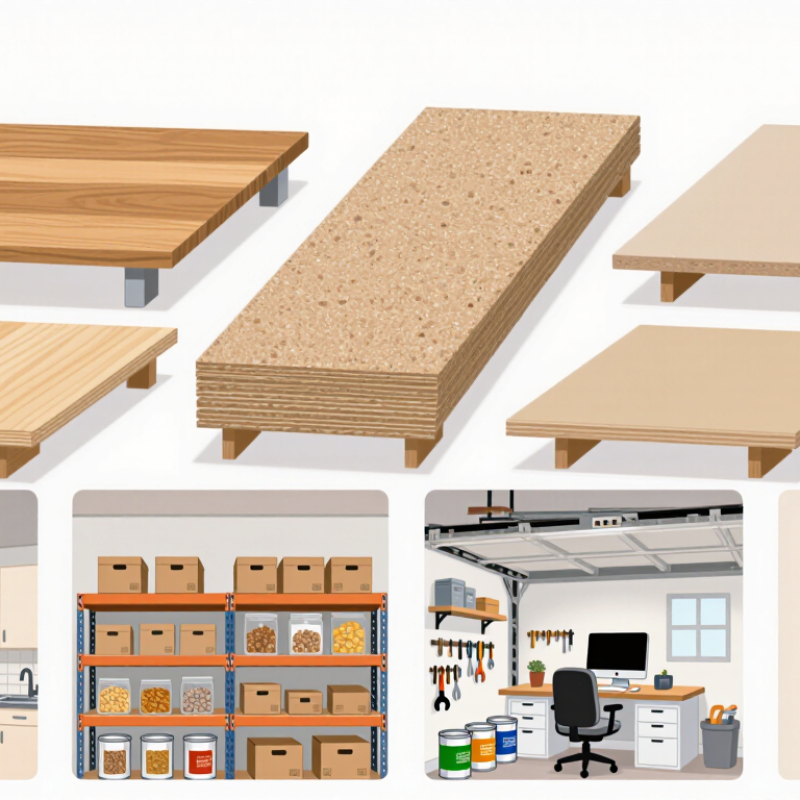
Define the Purpose, Location, and Load Requirements
A shelf for cookbooks has a different job from one holding paint cans or folded towels. Write down what it will store, how often you will reach for it, and whether items might be damp, dusty, or unusually heavy. Be specific. “Garage storage” is not enough; a row of small toolboxes creates a different load from one heavy machine.
Next, check the location. Measure the clear wall width, shelf depth, and distance between supports. Look for studs or other suitable fixing points, and note nearby heat, moisture, or direct sunlight. In a laundry room, occasional humidity may affect some board materials. A long, unsupported span can also sag over time, even when the board feels sturdy by hand. That detail is easy to miss.
Estimate the weight of the items on each shelf, not just the total weight of everything in the room. Consider whether loads will sit evenly or cluster near one edge. Check the board and bracket specifications, including the stated load conditions; ratings are not interchangeable across different spans and installations. Leave a margin rather than planning right up to a published limit. If the wall material or fixing method is uncertain, get qualified advice before loading the shelf. I find this part surprisingly easy to rush. A careful measurement now can prevent a bowed board later.
How to Choose Shelving Boards in 2026
Start with the items you’ll store and the available space. These typical shelf-depth ranges are practical planning starting points, not load ratings.
Choosing a board: Measure your items and location first, then select a board material, thickness, span, and supports for the intended load. Actual capacity depends on all of these factors; follow the manufacturer’s load guidance and secure the shelf properly.
Compare Shelving Board Materials and Their Strengths
How to Choose the Best Shelving Boards in 2026?
Compare Shelving Board Materials and Their Strengths
Plywood is made from layered veneers, which help it resist splitting and carry loads reliably when properly supported. Its edges may need finishing, especially in visible areas. Solid wood offers a natural look and can be sanded or repaired, but its cost and movement can vary with moisture. MDF has a smooth surface for painting and light-duty storage. It is heavy, however, and can swell if exposed to water. Particleboard is often economical, but its edges and screw-holding strength deserve careful attention. Metal shelving panels suit damp or utility areas, though they may feel less warm at home.
Tips: Check the board’s rated load and the support spacing, not just its thickness. A long shelf can sag under books even when the board feels sturdy by hand. Keep heavy items near the supports.
Match the material to the room and the objects you plan to store. For a pantry, sealed plywood may handle occasional humidity better than unprotected MDF, but ventilation still matters. For a painted display shelf, MDF can give a neat finish if spills are unlikely. Measure the span, then check the maker’s specifications for load limits. One detail is easy to miss: fasteners and wall supports affect performance too. I would not choose by appearance alone; a shelf can look solid and still flex more than expected.
Choose Board Thickness, Depth, and Span
Choosing shelf thickness, depth, and span is a load-design decision, not just a style choice. The USDA Forest Products Laboratory’s Wood Handbook (FPL-GTR-282, 2021) presents beam equations showing that, under equal loading and support conditions, deflection rises roughly with the fourth power of span. Increase a shelf span by 20%, and calculated deflection can become about 2.1 times greater. That is why adding a center support may help more than simply choosing a deeper board. Sag is easy to miss at first.
Thickness affects stiffness; depth affects how items sit and how far their weight acts from the wall. Check the board’s material, grade, and intended load, since a thicker low-grade panel is not automatically stronger. APA’s panel span-rating system, for example, uses ratings such as 24/16 for specified roof and floor support spacing. Those figures are not shelf-load ratings. Treating them as such would be a mistake. For a long shelf holding books, measure the unsupported span, estimate the load, and consult the manufacturer’s load tables or a qualified professional. Real rooms are rarely perfectly level, so leave room for adjustment—and question any plan based only on appearance.
Evaluate Finishes, Durability, and Environmental Factors
A board’s finish affects more than appearance. Smooth, sealed surfaces resist spills and wipe clean, while unfinished wood can absorb moisture and stain. Run your fingers along the edges and inspect corners for rough spots or thin coatings. Small details matter. For kitchens or laundry areas, choose a finish suited to occasional dampness, and dry spills promptly.
Durability depends on material, thickness, span, and load—not just a sturdy feel in the store. Check the maker’s load guidance, then consider what each shelf will hold: folded linens weigh less than rows of books. A long board may bow over time, especially in a humid room. I would not assume that a thicker board solves every problem; supports and installation matter too. Check screw holes and edges for signs of chipping.
Environmental factors deserve a closer look. Ask whether wood comes from responsibly managed sources, and compare recycled content where available. Low-emission finishes can be preferable indoors, but labels do not tell the whole story. Look for clear product information rather than relying on a green-colored package. Transport distance and expected service life also count: a durable board kept for years may avoid repeat replacements. Still, maintenance takes effort, and some finishes need careful cleaning to stay intact.
Check Compatibility, Installation Needs, and Total Cost
Choosing the best shelving boards starts with checking what they must fit and hold.
Measure the clear span, shelf depth, and available bracket spacing. Measure twice. A thick board may not sit securely on shallow supports, while a long, thin board can sag under books or kitchenware. Check the support maker’s load guidance and match it to the wall type, fasteners, and expected weight. In damp rooms, confirm that the board material and finish suit the conditions. Small details matter.
Installation needs affect the real price. Add brackets, suitable fasteners, cutting, edge finishing, delivery, and any tools you do not already own. If the wall needs reinforcement, include that work too. Compare the full installed cost, not just the price per board. Allow for offcuts; shelf lengths rarely use every inch of a standard board. A cheaper option can cost more after finishing or careful trimming. Not always. Estimates are imperfect, especially before you inspect the wall. Recheck measurements and support locations before buying, and leave room in the budget for one small mistake.
Conclusion
Choosing the best Shelving Boards in 2026 starts with understanding what they need to hold, where they will be installed, and how much weight they must support. Consider the differences between available materials, including their strength, stability, and suitability for the room. Then select a board thickness, depth, and span that fit both the intended use and the available space, keeping in mind that longer spans or heavier loads may require sturdier boards or additional support.
Before making a decision, compare finishes for durability and ease of care, and account for environmental factors such as moisture and temperature changes. Check that the boards will work with your brackets, supports, and installation method, and include all necessary hardware in your budget. By weighing performance, fit, upkeep, and total cost together, you can choose shelving that is dependable and practical for your needs.

 Expandrack