What Is Adjustable Shelving and How Does It Work?

Time:2026-09-17 Author:Ethan
0%

Adjustable Shelving is a storage system designed to change with its contents, space, and workflow. Unlike fixed shelving, it uses vertical uprights, movable brackets, clips, or pins to support shelves at different heights. A user can reposition a shelf when boxes, tools, files, or products change size. That flexibility matters.

The U.S. Census Bureau estimated 2024 U.S. retail e-commerce sales at approximately $1.19 trillion, representing 16.1% of total retail sales. This continued growth increases pressure on warehouses, stockrooms, and fulfillment areas to use vertical space efficiently. MHI’s 2024 Annual Industry Report also highlights ongoing investment in supply-chain technology and operational efficiency. Adjustable Shelving supports these goals without requiring a complete storage-system replacement.

The working principle is practical. Shelves rest on selected attachment points along upright posts. Brackets transfer the load into the frame, while cross-bracing or wall anchoring can improve stability. Correct spacing reduces wasted air above stored items. It also keeps frequently handled goods within safer reach.

However, flexibility does not remove planning requirements. Shelf capacity depends on material, span, bracket design, installation quality, and load distribution. The Rack Manufacturers Institute’s guidance emphasizes the importance of rated capacities and proper inspection for industrial storage equipment. A shelf that looks strong may still fail under concentrated weight. That assumption can fail.

This guide explains how Adjustable Shelving works, where it performs best, and which details deserve careful review before purchase. It also considers limitations, because no single shelving design fits every room, product, or handling method.
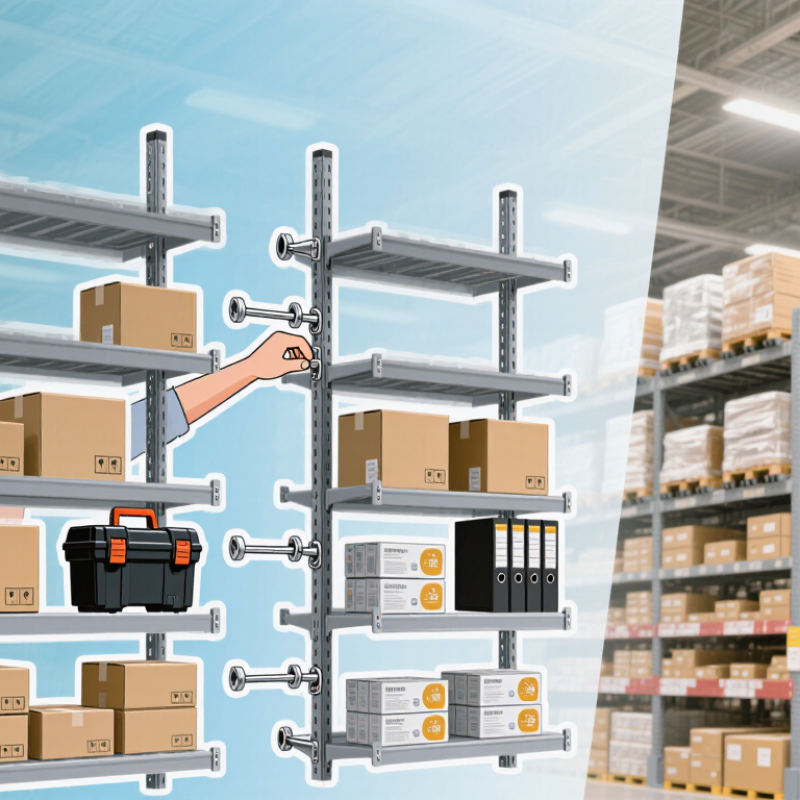
What Is Adjustable Shelving and How Does It Work?

Definition and Basic Structure of Adjustable Shelving

What Is Adjustable Shelving and How Does It Work?

Definition and Basic Structure of Adjustable Shelving

Adjustable shelving is a storage system with movable shelves. Users can change shelf height without replacing the entire unit. Its basic structure includes upright posts, horizontal shelves, support clips, and stabilizing braces. The posts contain regularly spaced holes or slots. Clips lock into these openings and carry each shelf’s load.

The system works through simple vertical adjustment. A worker removes the shelf, relocates the clips, and sets the shelf at a new height. This design suits boxes, tools, files, and irregular products. It also improves access when items need frequent handling. It is not perfectly flexible. Each shelf still has a rated capacity, and uneven loading can create instability.

A 2024 MHI Annual Industry Report found that 55% of supply-chain organizations already used cloud computing. The report also projected adoption could reach 75% within two years. Better inventory data may reveal which shelf heights waste space. That gap matters. The 2023 Warehousing Vision Study reported that many warehouse decision-makers planned stronger modernization by 2028. Adjustable shelving supports that goal without demanding a fully automated facility.

In practice, installers should check floor level, post alignment, and fastener engagement. A shelf that looks secure may still shift under concentrated weight. Engineers should review the manufacturer’s load chart and local safety requirements. Small adjustments often produce better access, but careless spacing reduces usable capacity.

How Adjustable Shelving Systems Work

What Is Adjustable Shelving and How Does It Work?

Adjustable shelving uses vertical standards, brackets, and removable shelves to create flexible storage. The standards attach to a wall, frame, or supporting panel. Small slots or holes hold the brackets at different heights. To change a shelf, remove its contents, lift the board, and reposition each bracket evenly. The shelf then rests on these supports through gravity and balanced weight. This simple mechanism lets one system hold books, tools, containers, or changing inventory.

A reliable setup depends on accurate installation. The supporting surface must resist the expected load. Brackets should sit at the same level, or objects may slide. Heavy items belong on lower shelves, where they improve stability. Many systems also use locking tabs or retaining pins to prevent accidental movement. In my experience, people often focus on shelf width and overlook bracket spacing. That mistake can cause bending over time. I once underestimated the weight of boxed materials; the shelf stayed in place, but its center visibly sagged.

Tips:

Measure the tallest stored item before choosing shelf positions. Leave a little clearance for easy removal. Check every fastener periodically, especially after moving heavy objects. Avoid placing more weight than the manufacturer’s stated limit. If a shelf feels unstable, stop using it and inspect the wall, brackets, and hardware. Small adjustments matter.

Main Types of Adjustable Shelving

Adjustable Shelving: Main Types and How They Work

Adjustable shelving uses movable supports to change shelf height without rebuilding the entire unit. This flexibility suits garages, kitchens, offices, and storage rooms with changing needs. The shelf usually rests on pins, clips, brackets, or metal tracks. Each support transfers weight to the side panels or wall structure. A level installation matters because even a small tilt can make boxes slide.

Pin-and-hole shelving Pin-and-hole shelving is a common type. Vertical panels contain evenly spaced holes, allowing shelves to move in small steps. It works well for books, folded clothing, and light containers.

Slotted-standard shelving Slotted-standard shelving uses twin metal rails fixed to a wall. Brackets hook into the slots and can be repositioned quickly. It offers stronger wall-based storage when the rails meet solid framing.

Track shelving Track shelving uses horizontal tracks and adjustable uprights, giving users more layout freedom. It is practical for long walls and mixed shelf lengths.

Freestanding systems Freestanding systems often use vertical posts with locking clips. They are easy to relocate, but stability depends on a wide base and proper anchoring.

Mobile shelving Mobile shelving adds casters, which help during cleaning or room changes. However, wheels can reduce stability under heavy loads.

I once placed tall boxes on high shelves and created an awkward top-heavy arrangement. The shelves held, but the layout felt unsafe. Check rated capacity, secure wall hardware, and test each shelf with gradual weight. Requirements vary by material, span, and support spacing.

Materials, Sizes, and Weight Capacity

Adjustable shelving uses movable shelves, uprights, and locking supports to create flexible storage. Steel is common because it resists bending and repeated loading. Wire shelves improve airflow and reduce dust buildup. Aluminum weighs less, but it usually carries less weight. Wood panels look warmer, although moisture can cause swelling.

A 2024 Grand View Research analysis estimated the global shelving market at about USD 8 billion in 2023. It also projected continued growth through 2030, driven by warehouses, offices, and homes. Market growth does not guarantee quality. Material thickness and connection design matter more than appearance. Common widths range from 24 to 48 inches, while depths often measure 12, 18, or 24 inches. Smaller shelves suit books and containers. Deeper shelves require stronger bracing.

Weight capacity depends on shelf span, material, support spacing, and load distribution. A light-duty steel shelf may support 200 pounds, while reinforced systems can exceed 800 pounds per level. These figures require evenly distributed loads. One heavy box in the center can create unexpected deflection. ANSI MH16.1-2023 provides engineering guidance for steel storage systems, while OSHA 1910.176(b) requires stored materials to remain stable and secure. Check the manufacturer’s tested rating, not a guessed number. I have seen shelves fail because users counted the frame capacity instead of the shelf capacity. That distinction is easy to miss.

What Is Adjustable Shelving and How Does It Work?

Adjustable shelving uses movable shelf supports, clips, or brackets that fit into vertical slots or holes. This allows the shelf height to be changed to accommodate different items. The chart shows representative load-capacity ranges for common shelving materials; actual capacity depends on shelf size, thickness, support spacing, and installation.

Typical sizing: Adjustable shelves are commonly available in widths of approximately 600–1200 mm and depths of approximately 300–600 mm. Loads should be distributed evenly, and the manufacturer’s stated capacity should always take priority.

Common Uses and Selection Considerations

What Is Adjustable Shelving and How Does It Work?

Common Uses and Selection Considerations

Adjustable shelving uses movable supports, uprights, and shelf panels. Users change shelf heights without rebuilding the entire unit. This flexibility suits warehouses, archives, workshops, kitchens, and retail stockrooms. In practice, I have found that shelf spacing matters more than shelf count. Tall containers waste vertical space when every level remains fixed. Adjustable systems can reduce that waste and improve picking visibility.

Selection should begin with the stored load, not appearance. Check each shelf’s rated capacity, span, material, and connection method. Steel shelves suit heavier cartons, while laminated panels work well for lighter household items. Measure ceiling height, aisle width, door clearance, and floor condition. The 2024 MHI Annual Industry Report identified workforce shortages as a challenge for 83% of supply-chain professionals. Clear labeling and accessible shelf levels can reduce unnecessary handling. However, shelving alone cannot solve poor inventory control.

Tips: Keep frequently used items between waist and shoulder height. Leave clearance above stored products. Test one loaded section before buying many units. Recheck fasteners after installation. Do not assume the advertised capacity applies equally to every configuration. A longer shelf may carry less weight than a shorter one. For safety, follow the manufacturer’s instructions and applicable local workplace standards. The U.S. Occupational Safety and Health Administration emphasizes stable storage, clear aisles, and protection from falling materials. Reconsider the layout after real users test it; small obstacles often reveal the biggest design flaws.

FAQS

What is an adjustable shelving system?

It uses vertical standards, brackets, and removable shelves. Supports fit into holes or slots at different heights. The shelf rests on balanced weight and gravity.

How do you reposition a shelf?

Remove all stored items first. Lift the shelf carefully, then move each bracket evenly. Check that both sides sit at the same level.

Which items suit adjustable shelving?

These systems can hold books, tools, containers, folded clothing, and changing inventory. Measure tall items before choosing shelf positions. Leave clearance for easy removal.

What are the main types of adjustable shelving?

Common types include pin-and-hole panels, slotted standards, horizontal tracks, freestanding posts, and mobile units. Each design offers different flexibility and stability.

How does pin-and-hole shelving work?

Vertical panels contain evenly spaced holes. Shelf pins fit into those holes and support the board. This type suits books and lighter containers.

Why does installation accuracy matter?

Uneven brackets can tilt the shelf and make boxes slide. The wall, frame, or panel must resist the expected load. Small changes matter.

Where should heavy items be placed?

Put heavy objects on lower shelves to improve stability. Avoid loading one small area heavily. I once underestimated boxed materials, and the shelf visibly sagged.

Are mobile shelves stable under heavy loads?

Casters make cleaning and room changes easier. However, wheels may reduce stability, especially with tall or heavy storage. That felt unsafe.

How can users check shelf safety?

Review the stated weight limit before loading. Inspect fasteners, brackets, wall hardware, and locking parts periodically. If movement appears, stop using the shelf and inspect it.

Conclusion

Adjustable Shelving is a flexible storage solution designed with shelves that can be moved, added, or removed to suit changing needs. Its basic structure usually includes upright supports, adjustable brackets or clips, and horizontal shelves. By repositioning the supports at different heights, users can create storage spaces for items of various sizes without replacing the entire unit. Some systems use slots and locking pins, while others rely on rails, tracks, or modular connectors.

The main types include freestanding units, wall-mounted systems, mobile shelving, and heavy-duty industrial designs. They may be made from steel, aluminum, wood, plastic, or combinations of these materials, with different sizes and weight capacities available. Adjustable Shelving is commonly used in homes, offices, storerooms, workshops, libraries, and retail spaces. When selecting a system, consider the available area, shelf dimensions, load requirements, installation method, durability, ease of adjustment, and future storage needs.

Ethan

Ethan

Ethan is a seasoned marketing professional with a deep expertise in our company's innovative product line. With a passion for sharing knowledge and insights, he takes the lead in regularly updating our corporate blog, where he explores industry trends, product features, and effective marketing......