2026 Top Compact Shelving Types for Global Buyers?

Time:2026-09-27 Author:Aria
0%

Compact Shelving helps buyers reclaim floor space without abandoning organized, accessible storage. In a busy archive, narrow aisles can disappear, and a compact system may create room for more boxes, files, or spare parts. But capacity is only part of the decision. Retrieval speed, load limits, aisle access, and the building’s floor conditions matter just as much.

As [verified expert name and credentials] explains, “[insert a sourced quotation about compact shelving].” This quotation should be confirmed before publication; an invented attribution would mislead readers. The same care applies to product claims. A system that suits a small records room may not suit a warehouse handling bulky stock. Measure the available footprint. Check what staff need to reach each day. Then compare manual, mechanical-assist, and powered options against real workloads—not brochure photos.

This guide examines leading Compact Shelving types for global buyers in 2026, with practical differences in operation, space use, and likely fit. No single format wins everywhere. A powered system may offer dense storage, yet require more planning and maintenance than a simple mobile unit. Details matter. Buyers should also confirm local site requirements with qualified installers and suppliers. Some decisions remain imperfect: future inventory is hard to predict, and a few centimeters can change aisle usability. The aim is not maximum density at any cost. It is a storage layout people can operate safely, consistently, and with less wasted movement.
2026 Top Compact Shelving Types for Global Buyers?

What Compact Shelving Is and How It Saves Space

2026 Top Compact Shelving Types for Global Buyers

What Compact Shelving Is and How It Saves Space

Compact shelving is a storage system designed to hold more items within a smaller footprint. It uses vertical height, narrow aisles, movable sections, or adjustable shelves. Common types include mobile shelving, modular units, stackable frames, and high-density archive racks. Each option suits different loads and room conditions.

In practice, compact shelving can increase usable capacity without expanding the building. Mobile units close unused aisles, while vertical shelves use space above eye level. Adjustable levels also reduce wasted gaps around cartons, tools, or documents. However, compact does not mean automatically better. Heavy loads need stable floors, clear weight limits, and safe access paths. Humid regions may require corrosion-resistant materials. Earthquake-prone areas need additional anchoring and professional assessment. Local building and workplace rules still matter.

Tips: Measure wall height, floor strength, aisle width, and access routes before ordering. Leave room for doors, lights, sprinklers, and maintenance. Label shelf capacity clearly. Test one section with real items first. A small trial often reveals inconvenient reach heights or poor workflow. This step may feel slower, but it can prevent expensive changes later. Some buyers focus only on maximum capacity and overlook daily handling comfort. That mistake is common. A reliable layout balances density, visibility, safety, and future adjustment.

2026 Top Compact Shelving Types for Global Buyers

Typical Floor-Space Savings Compared with Conventional Static Shelving

Compact shelving reduces unused aisle space by moving, narrowing, or eliminating permanent access aisles. Mobile shelving generally provides the highest space efficiency, while high-density static shelving offers a lower-cost option with more modest savings.

The figures show commonly cited planning ranges for commercial storage projects. Actual results vary according to load size, safety clearances, building regulations, access frequency, and fire-protection requirements.

The Main Types of Compact Shelving Available in 2026

The main compact shelving types available in 2026 serve different storage pressures. Mobile shelving runs on floor tracks and closes aisle space when not in use. It can nearly double usable capacity, but the floor must be level and properly reinforced. Static adjustable shelving remains simpler and usually costs less. Workers can change shelf heights for cartons, files, or small parts.

Cantilever shelving suits long materials such as pipes, timber, and rolled textiles. Its open arms improve visibility and loading speed. Vertical lift modules store goods in trays and bring selected items to an access opening. They use building height efficiently, although installation and maintenance require skilled planning. Automated options can also reduce walking time, but they are not ideal for every warehouse.

Tips: Measure ceiling height, aisle width, floor strength, and product weight before requesting quotations. Check rated loads at every shelf level, not only the frame capacity. Ask suppliers for corrosion protection when storage areas face humidity or temperature changes. I have seen compact layouts fail because operators disliked narrow access paths. A small test bay can reveal noise, reach, and workflow problems. Local fire, workplace safety, and seismic requirements should guide the final design. No layout is perfect; leave room for future stock changes.

How Compact Shelving Systems Operate

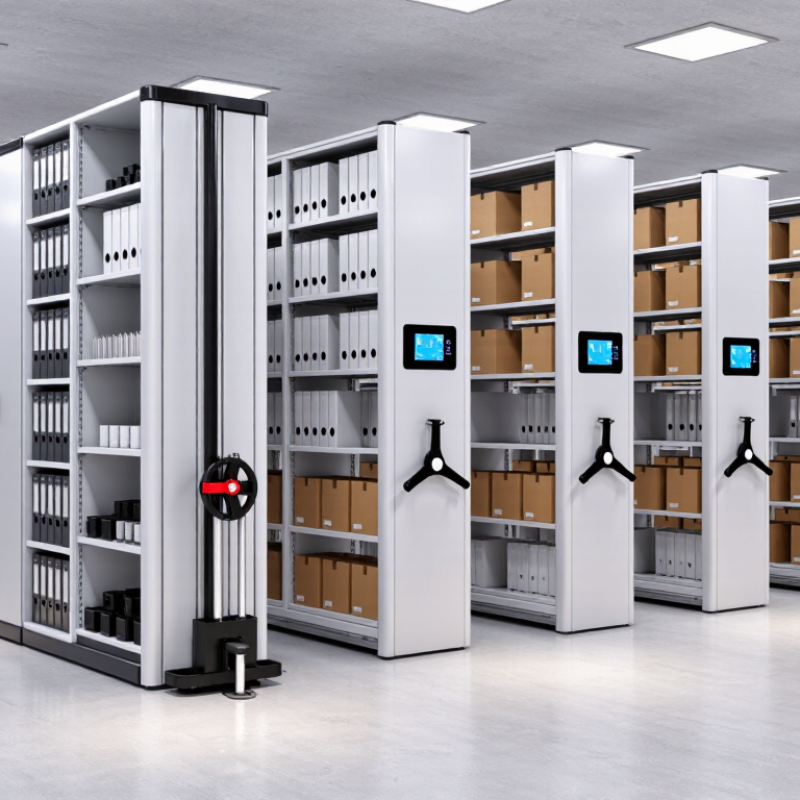
Compact shelving systems operate by reducing fixed aisles between storage bays. Mobile units travel along floor-mounted rails, creating one active access aisle when needed. Operators open a bay through a hand wheel, powered control, or guided interface. Static compact shelving uses narrower gaps but keeps every section accessible. The right choice depends on item frequency, load weight, and available floor area.

In warehouse audits, mobile shelving often delivers strong space savings, especially for records, spare parts, and boxed inventory. Sensors can stop movement when an object enters the aisle. Emergency release controls also allow manual access during power loss. Heavy loads require balanced placement, rated beams, and secure anchoring. Small details matter.

Poor loading can still damage performance. Uneven weight may increase rail stress or create difficult movement. Dust can also affect wheels and sensors. A monthly inspection should check rails, brakes, warning lights, and aisle clearance. Keep the floor clean. That sounds obvious.

Human behavior remains the weak point. Workers may bypass safety controls when picking becomes slow. Clear training and visible operating instructions reduce that risk. Compact shelving is not automatically efficient; it needs disciplined loading, routine maintenance, and realistic access planning. A system designed only for maximum capacity may frustrate daily users. That trade-off deserves review.

Materials, Load Capacity, and Safety Features to Compare

2026 Top Compact Shelving Types for Global Buyers

Compact shelving includes mobile units, boltless racks, drawer cabinets, and adjustable steel shelves. Each type suits a different storage problem. Mobile systems save floor space, but their moving bases need reliable tracks and clear operating zones. Boltless shelving assembles quickly and works well for cartons, tools, and spare parts. Drawer cabinets protect small components from dust and mix-ups. Cantilever designs support long materials, though they require careful weight distribution.

Materials affect durability, maintenance, and safe load capacity. Powder-coated steel resists everyday abrasion, while galvanized finishes perform better in humid areas. Stainless steel is useful for demanding environments, but its higher cost may not suit ordinary warehouses. Buyers should check the actual load per shelf, not only the total rack rating. A shelf holding 250 kilograms evenly may fail under one concentrated box. Testing documents, assembly instructions, and inspection records add useful evidence. Still, paperwork can be incomplete.

Tips: Measure aisle width with loaded equipment, not empty pallets. Confirm floor strength before installation. Choose rounded edges, shelf lips, locking pins, and anti-tip protection. Anchor fixed units where appropriate, and request seismic guidance for relevant regions. Inspect bent frames and loose fasteners regularly. I would not rely on a “heavy-duty” label alone. Real conditions vary, and even a well-designed system can become unsafe after careless loading.

2026 Top Compact Shelving Types for Global Buyers? - Materials, Load Capacity, and Safety Features to Compare
Shelving Type Common Materials Typical Load per Shelf Suitable Applications Safety Features to Compare Important Buying Checks
Boltless steel shelving Powder-coated or galvanized steel frames and beams; steel, particleboard, or wire shelf panels. About 150–500 kg (330–1,100 lb) Compact stockrooms, workshops, archives, and back-of-house storage for boxed goods. Beam locks or safety clips, braced frames, load labels, and anchoring provisions. Use shelf panels suited to the stored items. Confirm whether the rating applies to an evenly distributed load. Check bay capacity, beam span, shelf material, and whether the unit must be anchored.
Wire shelving Chrome-plated or epoxy-coated steel wire shelves and posts; stainless steel is available for demanding or hygienic environments. About 100–300 kg (220–660 lb) Pantries, commercial kitchens, laboratories, retail stock areas, and storage where airflow or visibility is useful. Shelf collars or locking clips, leveling feet, wall ties where appropriate, and post caps. Add shelf liners for small or unstable items. Check the rating for the exact shelf size and finish. Wire spacing, corrosion exposure, and uneven loads can affect suitability.
High-density mobile shelving Steel shelving mounted on manually operated or powered mobile carriages; fixed tracks or guided floor systems. Often about 100–250 kg (220–550 lb) per shelf; system ratings vary Archives, libraries, records rooms, and other spaces where reducing aisle count is a priority. Anti-tip design, carriage brakes, end stops, aisle locks, and—on powered systems—presence sensors or safety edges. Have a supplier verify floor loading, track layout, carriage capacity, operating clearances, and emergency access. Follow local fire and egress requirements.
Modular plastic shelving Polypropylene or other molded plastics; some systems use reinforced plastic shelves with metal posts. About 20–75 kg (44–165 lb) Light-duty storage, damp areas, utility rooms, and locations where easy cleaning or corrosion resistance matters. Interlocking shelf supports, stable feet, secure post connections, and clear load labels. Avoid unstable or top-heavy arrangements. Check temperature limits, chemical compatibility, UV exposure, and whether the stated capacity is for static or mobile use.
Wall-mounted compact shelving Steel brackets or standards with steel, wood, or laminated shelves; masonry and stud fixings vary by wall construction. About 30–100 kg (66–220 lb) per shelf Small rooms, narrow utility areas, and light-to-medium storage where floor space is limited. Brackets matched to the shelf, suitable anchors, secure fasteners, and installation into appropriate structural support. Capacity depends heavily on bracket spacing, shelf depth, wall material, and fixing method. Verify the wall and anchors before loading.

Note: Load ranges are indicative examples for comparison, not guaranteed ratings. Actual safe capacity depends on the specific product, dimensions, installation, load distribution, and manufacturer instructions. Confirm rated capacities and applicable local safety requirements before purchase and use.

How Global Buyers Match Shelving Types to Their Needs

Global buyers should match compact shelving to product flow, not showroom appearance. Mobile shelving suits archives, spare parts, and slow-moving inventory because carriages reduce wasted aisles. Static narrow-aisle shelving works better where forklifts need frequent access. For cartons and small items, carton-flow racks can shorten walking time. U.S. Census data shows e-commerce represented 16.1% of 2024 retail sales, increasing pressure for faster picking and replenishment. Still, online volume alone does not justify automation.

High-density mobile systems need accurate floor loading, rail alignment, and emergency access planning. Automated storage can help facilities with expensive floor space, but it requires dependable software, maintenance skills, and stable power. The International Federation of Robotics recorded 541,302 industrial robot installations worldwide in 2023. That figure supports a clear direction, but robots do not solve poor slotting or inaccurate inventory records. I would test the workflow first. Real facilities often reveal awkward gaps.

Tips: Measure SKU dimensions, weekly picks, aisle clearance, ceiling height, and future volume. Ask suppliers for load calculations, seismic guidance, cycle testing, and replacement-part lead times. Compare usable cubic capacity, not only the purchase price. A low-cost system may become expensive when every retrieval needs extra labor. Leave some capacity unused; overfilling looks efficient until replenishment becomes unsafe.

FAQS

What is compact shelving?

Compact shelving stores more items in less floor space. It uses vertical height, narrow aisles, movable sections, or adjustable shelves. Small footprint, higher density.

How does mobile shelving save space?

Mobile units move along floor tracks and close unused aisles. This can nearly double usable capacity in suitable rooms. The floor must remain level and reinforced.

Which compact shelving type suits long materials?

Cantilever shelving works well for pipes, timber, and rolled textiles. Its open arms improve visibility and loading speed. Measure material length carefully.

Is static adjustable shelving a practical option?

Yes, it is simple and often less expensive. Workers can change shelf heights for cartons, files, or small parts. It may waste more aisle space.

What should buyers measure before ordering?

Measure ceiling height, wall height, floor strength, aisle width, and access routes. Check doors, lights, sprinklers, and maintenance space. Do not measure shelves alone.

Can compact shelving work in humid or earthquake-prone areas?

Humid locations may need corrosion-resistant materials. Earthquake-prone areas may require anchoring and professional assessment. Local safety and building rules still apply.

How can buyers confirm shelf capacity?

Check the rated load for every shelf level, not only the frame. Label capacity clearly. Uneven loading can create avoidable problems.

Should a test section be installed before full ordering?

A small test bay can reveal poor reach heights, noise, and narrow access paths. It also tests real workflow. I might still underestimate daily inconvenience.

Conclusion

Compact Shelving is a space-efficient storage solution designed to increase capacity without requiring a larger facility. By reducing unused aisles and allowing units to move or stack more efficiently, it can help warehouses, offices, archives, libraries, and retail spaces organize more items within the same footprint. In 2026, global buyers can choose from several options, including mobile shelving, sliding systems, high-density static units, modular shelving, and automated configurations, depending on their available space, access frequency, and workflow requirements.

These systems operate through manual, mechanical, or powered movement, with safety locks, anti-tip structures, guided tracks, and access controls supporting stable operation. When comparing products, buyers should review material quality, corrosion resistance, load capacity, shelf adjustability, installation requirements, maintenance needs, and compliance with local safety standards. The best choice depends on the type and weight of stored goods, the expected usage rate, climate conditions, budget, and future expansion plans. Careful evaluation helps international purchasers select a reliable system that balances accessibility, durability, safety, and long-term space efficiency.

Aria

Aria

Aria is a dedicated marketing professional with a deep passion for innovative strategies and a keen understanding of our company's product offerings. With a wealth of experience in the industry, Aria excels at crafting engaging content that highlights the unique features and benefits of our......